8 Essential Types of Abstract Art Explained Simply
June 23, 2026 16 min read 3,156 words
Dive into the vibrant world of non-representational art and discover the diverse forms that have shaped modern artistic expression.
Explore Abstract Art
The Dawn of Abstraction: Pioneers and Early Movements
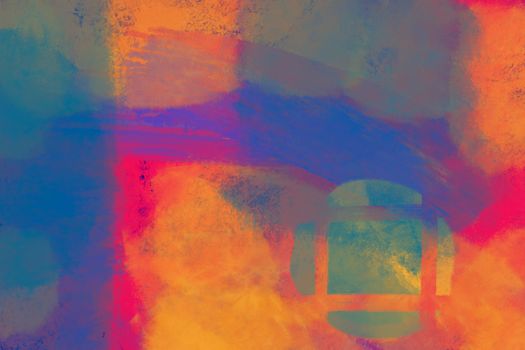 Photo: Steve A Johnson / Pexels
Abstract art, often perceived as a modern phenomenon, has roots that stretch back to the early 20th century, marking a radical departure from centuries of representational art. Before its emergence, Western art largely focused on depicting the world as it appeared, striving for realism and narrative clarity. The industrial revolution, advancements in science, and profound societal shifts created an environment ripe for artistic experimentation. Artists began to question the very purpose of art, moving beyond mere imitation to explore inner worlds, spiritual dimensions, and the pure expressive power of form and color. This seismic shift gave birth to numerous movements, each contributing to the rich tapestry of abstract art we recognize today.
One of the most pivotal figures in the inception of abstract art was Wassily Kandinsky. Often credited with creating one of the first purely abstract paintings, Kandinsky believed that art should express an artist's inner spiritual life, much like music. He saw colors and forms as possessing their own spiritual vibrations, capable of evoking deep emotional responses without needing to depict any recognizable object. His early works, often termed 'Lyrical Abstraction' or 'Orphism' (though Orphism is a distinct movement by Robert Delaunay), were characterized by vibrant, clashing colors and dynamic, fluid shapes, aiming to create a symphonic experience for the viewer. He published 'Concerning the Spiritual in Art' in 1911, a seminal text that articulated his theories and provided a philosophical foundation for non-objective art. His journey from representational landscapes to complete abstraction illustrates the profound intellectual and emotional quest that defined the early abstract pioneers.
Another significant early movement was Cubism, primarily developed by Pablo Picasso and Georges Braque around 1907. While not entirely non-objective, Cubism broke objects down into geometric forms and reassembled them in an abstract way, presenting multiple viewpoints simultaneously. This intellectual approach to representation challenged conventional perspective and paved the way for pure abstraction by demonstrating that reality could be fragmented and reinterpreted. Analytical Cubism, with its muted colors and complex, overlapping planes, meticulously deconstructed subjects, pushing them to the brink of unrecognizability. Synthetic Cubism followed, reintroducing some color and collage elements, creating flatter, more decorative patterns. Cubism's impact on subsequent abstract movements was immense, particularly in its radical rethinking of form and space.
Following closely on the heels of these innovations, movements like Suprematism and Constructivism emerged in Russia. Kazimir Malevich, the founder of Suprematism, sought to free art from the burden of the object, aiming for the 'supremacy of pure artistic feeling.' His most iconic work, 'Black Square' (1915), is a stark, absolute statement of non-objectivity, presenting a simple black square on a white background. This radical simplicity aimed to convey universal spiritual feelings through minimal geometric forms. Constructivism, led by artists like Vladimir Tatlin and Alexander Rodchenko, focused on art for social purposes, emphasizing geometric abstraction and industrial materials to create utilitarian and socially engaged art. Both movements, though distinct in their philosophies, utilized geometric abstraction to forge a new artistic language divorced from the material world. These early explorations laid the groundwork for the diverse
forms of artistic expression that would flourish throughout the 20th century and beyond, forever changing how we perceive and create art.
Geometric Abstraction: Precision and Order
Geometric abstraction represents a significant branch within the broader abstract art movement, characterized by its reliance on geometric shapes, lines, and colors arranged in non-representational compositions. Unlike the more organic or expressive forms of abstraction, geometric abstraction emphasizes order, structure, and often a sense of mathematical precision. Artists working in this style frequently reduce forms to their most fundamental elements, seeking universal principles of harmony and balance. This approach often results in compositions that feel intellectual, systematic, and sometimes even austere, yet they can be deeply engaging in their formal purity.
One of the most famous proponents of geometric abstraction is Piet Mondrian, the Dutch painter who founded the De Stijl movement (meaning 'The Style') in the Netherlands. Mondrian’s iconic works, with their grids of black lines and primary colors (red, yellow, blue) on white backgrounds, are instantly recognizable. His philosophy, known as Neoplasticism, aimed to express universal aesthetic principles through the utmost reduction of form and color. He believed that by stripping away all non-essential elements, art could achieve a state of pure harmony and spiritual clarity, reflecting the underlying order of the universe. Mondrian’s compositions are meticulously balanced, with each line and color block carefully placed to create a dynamic equilibrium, demonstrating that profound artistic statements can be made with the simplest of means. His work continues to influence design, architecture, and art to this day, standing as a testament to the power of geometric simplicity.
Beyond De Stijl, other artists and movements have explored geometric abstraction in various ways. The Russian Constructivists, as mentioned earlier, also employed geometric forms, but often with a utilitarian or social purpose, integrating art into industrial production and design. The Bauhaus school in Germany, though not strictly an abstract art movement, heavily influenced geometric abstraction by integrating art, craft, and technology, fostering a functionalist approach where form followed function, often expressed through clean lines and basic shapes. Artists like Josef Albers, known for his 'Homage to the Square' series, meticulously explored the optical effects of color and form within a strict geometric framework, demonstrating how subtle variations could create dramatic visual experiences.
Geometric abstraction can also be seen in the Op Art movement of the 1960s, where artists like Victor Vasarely used geometric patterns and precise color arrangements to create optical illusions and a sense of movement on a flat surface. While Op Art often focuses on viewer perception and visual trickery, its underlying methodology is rooted in the careful manipulation of geometric elements. This type of abstraction invites the viewer to appreciate the beauty of pure form, the interplay of lines and planes, and the inherent order that can be found in a world often perceived as chaotic. It challenges us to look beyond the literal and find meaning in the fundamental building blocks of visual language, proving that even the most minimal arrangements can convey complex ideas and emotions.
Abstract Expressionism: Emotion Unleashed
Abstract Expressionism emerged in the United States in the aftermath of World War II, marking a significant shift in the art world's center from Paris to New York. This movement is characterized by its emphasis on spontaneous, gestural, and often large-scale application of paint, intended to express profound emotional states and psychological truths rather than depicting objective reality. It was a reaction against the geometric precision of earlier abstract forms and a desire to convey the raw, unfiltered experience of the artist. Abstract Expressionists believed that the act of painting itself was a vital, expressive process, a direct outpouring of the subconscious mind onto the canvas.
The movement is broadly divided into two main tendencies: Action Painting and Color Field Painting. Action Painting, famously epitomized by Jackson Pollock, involved highly energetic and often improvisational methods. Pollock would drip, pour, and splash paint onto canvases laid on the floor, using his entire body in the creative process. This technique, sometimes referred to as 'all-over painting,' eliminated a central focal point, suggesting an infinite extension beyond the canvas edges. For Pollock and other Action Painters like Willem de Kooning, the canvas became an arena for self-expression, a record of the artist's intense physical and emotional engagement. The process was as important as the final product, embodying a sense of freedom, chaos, and raw human experience that resonated with the post-war psyche. The sheer scale of many of these works also aimed to envelop the viewer, creating an immersive and often overwhelming emotional experience.
Color Field Painting, on the other hand, focused on large, unbroken areas of color, aiming to evoke meditative or sublime emotional responses. Artists like Mark Rothko and Barnett Newman are key figures in this sub-movement. Rothko's iconic 'multiforms' consisted of soft-edged, rectangular blocks of color that seem to float on the canvas, creating a sense of shimmering depth and intense emotional resonance. He believed that these vast fields of color could transport the viewer to a spiritual realm, inviting contemplation and introspection. Newman, with his 'zips' – thin vertical lines dividing large color fields – sought to achieve similar sublime effects, describing his work as a search for the 'sublime moment.' Unlike the frenetic energy of Action Painting, Color Field artists prioritized stillness, introspection, and the psychological impact of pure color.
Abstract Expressionism was not a monolithic style; rather, it was a collective of diverse artists united by a shared commitment to radical self-expression and a rejection of traditional artistic conventions. Its influence was profound, paving the way for subsequent movements like Minimalism and Post-Painterly Abstraction, and firmly establishing abstract art as a powerful and legitimate form of artistic communication. It proved that art could communicate complex human emotions and ideas without recourse to recognizable imagery, relying solely on the power of color, form, and gesture to stir the viewer's soul. Understanding these
different approaches to abstraction helps illuminate the breadth and depth of this transformative artistic era.
Exploring Other Significant Abstract Art Forms and Tips for Appreciation
Beyond the foundational movements, the landscape of abstract art is rich with diverse forms, each offering a unique perspective on non-representational expression. Understanding these additional types further enriches one's appreciation of the genre.
**Tachisme and Art Informel:** Originating in Europe around the same time as Abstract Expressionism, Tachisme (from the French word 'tache' meaning stain or blot) and Art Informel ('unformed art') shared a similar emphasis on spontaneous, gestural brushwork and emotional expression. Unlike the American focus on scale and a distinctly 'heroic' style, these European counterparts often explored a more intimate, sometimes somber, approach to abstraction. Artists like Jean Fautrier, Wols, and Pierre Soulages used thick impasto, drips, and expressive marks to convey profound internal states, often reflecting the trauma and disillusionment of post-war Europe. While sharing a visual language with Action Painting, their philosophical underpinnings often diverged, emphasizing the raw materiality of paint and a more introspective, existential outlook.
**Lyrical Abstraction (Post-1960s):** While Kandinsky's early work is sometimes referred to as lyrical abstraction, the term gained renewed prominence in the late 1960s and 1970s, particularly in the US. This later wave of Lyrical Abstraction reacted against the austerity of Minimalism and the conceptual rigor of Pop Art. It marked a return to painterly expression, vibrant colors, and flowing, often curvilinear forms. Artists like Helen Frankenthaler (who also had roots in Color Field painting) and Jules Olitski explored the fluidity of paint, often staining unprimed canvases to create soft, ethereal washes of color. This form of abstraction prioritizes aesthetic beauty, emotional resonance, and the sensual qualities of paint itself, offering a more gentle and evocative visual experience compared to the forceful gestures of Abstract Expressionism or the starkness of geometric forms.
**Post-Painterly Abstraction:** Coined by art critic Clement Greenberg in 1964, Post-Painterly Abstraction was a movement that sought to move beyond the gestural intensity and emotional 'hotness' of Abstract Expressionism. Artists in this vein, including Morris Louis, Kenneth Noland, and Frank Stella, emphasized clarity, open composition, and the physical qualities of the canvas itself. They often applied paint thinly, sometimes staining the canvas directly to remove any trace of the artist's hand or emotional expression, focusing instead on pure optical effects of color and form. This movement aimed for a cooler, more intellectual approach, prioritizing the formal elements of painting over subjective emotion, and paved the way for the minimalist tendencies that followed.
**Minimalism (in Abstract Art):** While Minimalism is a broader art movement, its abstract manifestations are crucial. Emerging in the 1960s, minimalist abstract art sought to strip away all non-essential elements, reducing art to its most fundamental forms, colors, and materials. Artists like Donald Judd, Agnes Martin, and Robert Ryman created works characterized by extreme simplicity, repetition, and often industrial materials. The focus shifted from the artist's personal expression to the object itself and the viewer's perception of it in space. Minimalist abstract paintings often feature grids, monochromatic fields, or simple geometric arrangements, challenging the viewer to confront the artwork as a pure object rather than a window into another world. The emphasis here is on the purity of form, the materiality of the medium, and the direct, unmediated experience of the artwork.
**Tips for Appreciating Abstract Art:**
* **Let Go of Expectations:** Don't search for a hidden picture. Instead, allow the colors, shapes, and lines to affect you directly.
* **Focus on Elements:** Consider how the artist uses color (warm, cool, vibrant, muted), line (thick, thin, straight, curved), texture (smooth, rough, impasto), and composition (balanced, unbalanced, dynamic, static).
* **Consider the Title (or Lack Thereof):** A title can sometimes offer a clue to the artist's intent, but often abstract works are untitled to encourage pure subjective experience.
* **Research the Artist/Movement:** Understanding the historical context and the artist's philosophy can provide valuable insights into their work.
* **Engage Your Emotions:** Abstract art often aims to evoke feelings. What emotions does the piece stir in you? Does it feel calm, chaotic, joyful, intense?
* **Step Back and Step In:** View the artwork from a distance to grasp its overall impact, then move closer to appreciate details, brushstrokes, and textures.
* **Trust Your Own Interpretation:** There's no single 'right' answer in abstract art. Your personal experience and interpretation are valid and part of the artwork's meaning.
