✓ Street art's origins can be traced to ancient civilizations, but modern forms emerged in 20th-century American cities.
✓ Graffiti writing in Philadelphia and New York City in the 1960s and 70s was a foundational element.
✓ Early street art was often associated with counter-culture movements and socio-political commentary.
✓ The 1980s saw a rise in diverse techniques and a growing recognition of street art as a legitimate art form.
How It Works
1
Ancient Origins & Early Mark-Making
Understand how humans have historically used public spaces for expression, from cave paintings to political slogans. This sets the stage for modern street art's lineage.
2
The Birth of Modern Graffiti
Explore the pivotal role of tagging in 1960s and 70s US cities, particularly New York and Philadelphia. Learn about the early pioneers and their motivations.
3
Evolution into Diverse Forms
Discover how street art expanded beyond traditional graffiti, incorporating stenciling, wheatpasting, murals, and more. This period marks a significant artistic diversification.
4
Global Recognition & Commercialization
Witness street art's journey from illicit activity to celebrated gallery exhibits and public installations. Understand the ongoing debate around its commercialization and preservation.
The Nascent Seeds: Early Public Expressions and Proto-Graffiti
Photo: Nikhil Singh / Pexels
The history of street art movement is not a phenomenon solely of the last century; its roots stretch back to antiquity, reflecting humanity's primal urge to leave a mark on public surfaces. From the hieroglyphs adorning ancient Egyptian tombs to the political slogans scrawled on the walls of Pompeii, the concept of public art and communication outside sanctioned galleries has always existed. These early forms, while not 'street art' in the modern sense, established a precedent for using urban landscapes as a canvas for expression, protest, and storytelling. In the United States, early iterations of public mark-making can be seen in the hobo symbols etched into train cars and underpasses during the Great Depression, a secret language of survival and warning. These early forms of public art, often ephemeral and utilitarian, laid the groundwork for the more complex and artistically driven movements to come. The mid-20th century, however, marked a significant shift. Post-World War II America saw an explosion of consumer culture and urban development, leading to new forms of public visual communication. Advertisements, posters, and political messages began to proliferate in city spaces, creating a visually rich, albeit often commercial, environment. This saturation of public imagery provided both a backdrop and a catalyst for artists who sought to reclaim these spaces for independent, often subversive, expression. The rise of youth culture in the 1950s and 60s, coupled with growing social and political unrest, further fueled this desire for direct communication. While not yet coalescing into a distinct 'street art movement,' these disparate acts of public marking were critical precursors, demonstrating a collective human impulse to engage with and transform their immediate surroundings, setting the stage for the explosive emergence of graffiti as a dominant force. This period was characterized by individual acts of rebellion and assertion, rather than an organized movement, but their cumulative effect was to normalize the idea of the street as a legitimate, albeit contested, site for visual discourse.
The Birth of Modern Graffiti: New York City's Canvas
Photo: code mnml / Pexels
The true genesis of the modern history of street art movement is widely attributed to the vibrant and tumultuous urban landscapes of Philadelphia and New York City in the late 1960s and early 1970s. This era saw the emergence of 'graffiti writing' as a distinct cultural phenomenon, primarily driven by teenagers who used spray paint to tag their names or 'tags' across city walls, subway cars, and public spaces. Darryl McCray, known as 'CORN BREAD,' is often cited as one of the earliest and most prolific taggers in Philadelphia, his name appearing everywhere in the late 1960s. However, it was in New York City where the movement truly exploded, evolving rapidly from simple tags to elaborate 'pieces' – intricate, colorful, and often illegible designs. Taki 183, a Greek-American teenager from Washington Heights, gained notoriety in 1971 for tagging his name and street number across all five boroughs, attracting media attention and inspiring a generation. His fame sparked a competitive drive among young artists to see who could get their tag up the most and in the most challenging locations. This competitive spirit fueled rapid innovation in style, technique, and scale. Writers like PHASE 2, BLADE, SEEN, and LADY PINK became legends, pushing the boundaries of letterform, color, and composition. The subway system, with its mobile canvases, played a crucial role, carrying these artistic expressions across the city, transforming trains into moving galleries. This period was characterized by a raw energy and a desire for recognition in communities that often felt marginalized or unheard. Graffiti offered a powerful voice, a way to assert identity and presence in an otherwise indifferent urban environment. It was an art form born of necessity and rebellion, a direct challenge to the established order of public space. The rapid proliferation of graffiti led to both fascination and condemnation, with city authorities viewing it as vandalism and a sign of urban decay, while many young people saw it as a legitimate form of artistic expression and social commentary. This dichotomy between art and crime would become a defining tension in the ongoing narrative of street art.
Global Recognition and Contemporary Manifestations
Photo: Eleonora Vokueva / Pexels
The late 20th and early 21st centuries have witnessed the history of street art movement achieve unprecedented global recognition and mainstream acceptance, though often with complex implications. What began as an illicit, underground subculture has transformed into a celebrated art form, adorning urban centers worldwide and fetching high prices in auction houses. Artists like Banksy, with his anonymous identity and sharp socio-political commentary, have propelled street art into the global consciousness, sparking discussions about capitalism, surveillance, and freedom of expression. His work, often appearing overnight in unexpected locations, challenges viewers to confront uncomfortable truths and question authority. This period has seen a surge in large-scale murals, often commissioned by cities and organizations, transforming drab walls into vibrant public canvases. Festivals dedicated to street art, such as Art Basel Miami's Wynwood Walls, have become major tourist attractions, showcasing the work of renowned artists from around the globe. This mainstream embrace, however, comes with its own set of challenges and debates. Questions of gentrification, authenticity, and commercialization frequently arise. Some purists argue that once street art is sanctioned or commodified, it loses its rebellious edge and its essential 'street' character. The tension between its illicit origins and its contemporary status as a valuable commodity continues to define much of the discourse around the movement. Despite these debates, the impact of street art is undeniable. It has democratized art, bringing it directly to the people, outside the confines of traditional institutions. It has sparked dialogue, beautified urban spaces, and given voice to marginalized communities. From the intricate stencil work to massive photorealistic murals, contemporary street art continues to evolve, reflecting the ever-changing social and political landscapes of our world. Its journey from clandestine acts of defiance to celebrated public installations underscores its enduring power as a form of human expression and a vital component of modern urban culture.
Comparison
Feature
Traditional Graffiti
Modern Street Art
Public Murals
Primary Medium
Spray paint
Diverse (spray, stencil, wheatpaste)
Paint (brush, spray)
Legality
Often illegal
Mixed (some illicit, some sanctioned)
Typically sanctioned
Primary Goal
Tagging, fame, rebellion
Expression, social commentary, aesthetics
Beautification, community message
Visibility
Subway, hidden spots
Walls, public spaces
Prominent buildings, public squares
What Readers Say
★★★★★
"This article masterfully traces the history of street art movement. I particularly enjoyed learning about the early Philadelphia origins, which I hadn't known before. It's a comprehensive and engaging read."
Sarah J. · Brooklyn, NY
★★★★★
"As an art enthusiast, understanding the evolution of graffiti into modern street art was crucial. This piece provides a fantastic, detailed timeline and explains the cultural shifts perfectly."
Mark D. · Los Angeles, CA
★★★★★
"Before reading, I saw street art as just cool images. Now, I have a deep appreciation for its history and the artists' motivations, thanks to this article's thorough explanation of the history of street art movement."
Eliza K. · Chicago, IL
★★★★★
"A very informative article, though I would have loved to see more specific examples of early female artists in the history of street art movement. Still, it's a solid overview."
David L. · Miami, FL
★★★★★
"The way this article connects ancient markings to contemporary murals really puts the history of street art movement into perspective. It's truly a human story of expression."
Chloe P. · Portland, OR
Frequently Asked Questions
What is considered the starting point of the modern history of street art movement?
The modern history of street art movement is generally considered to have begun in the late 1960s and early 1970s in American cities, particularly Philadelphia and New York City. This period saw the emergence of 'graffiti writing' or 'tagging' by teenagers who used spray paint to mark their names on public surfaces, evolving into more complex artistic expressions on subway cars and walls.
Was early street art always considered vandalism?
Yes, early street art, especially graffiti, was largely considered vandalism by city authorities and much of the public. It was often associated with urban decay and crime. However, within the communities where it emerged, and among the artists themselves, it was seen as a legitimate form of expression, rebellion, and a means of asserting identity and presence.
How did street art evolve beyond simple tagging?
Street art evolved significantly beyond simple tagging by the 1980s. Artists began experimenting with diverse techniques such as stenciling (using cut-out templates), wheatpasting (gluing printed posters), and large-scale murals. This expansion allowed for more complex imagery, broader themes, and a shift from pure name-writing to more overtly artistic and socio-political statements.
What is the cultural impact and value of street art today?
Today, street art holds significant cultural impact and value. It has democratized art, making it accessible to everyone in public spaces. It serves as a powerful medium for social commentary, political protest, and community beautification. While still facing debates around legality and commercialization, it is increasingly recognized in galleries and museums, contributing to urban identity and attracting tourism.
How does street art differ from traditional fine art?
Street art primarily differs from traditional fine art in its context, accessibility, and often its intent. While fine art is typically displayed in galleries or museums, street art exists in public spaces, directly engaging with the urban environment and general public. It often embraces ephemerality, anonymity, and a direct, often subversive, engagement with social and political issues, contrasting with the more institutionalized and often commercial nature of fine art.
Who should learn about the history of street art movement?
Anyone with an interest in art history, urban culture, sociology, or social justice should delve into the history of street art movement. It offers valuable insights into human expression, cultural rebellion, the evolution of public spaces, and the ongoing dialogue between art and society. Artists, students, urban planners, and curious citizens will find its narrative compelling.
Is street art safe for artists, considering its often illicit origins?
The safety of street artists varies greatly depending on the legality of their work. While commissioned murals and public art projects offer a safe and legitimate platform, artists engaging in unsanctioned work ('graffiti' or 'bombing') face risks of arrest, fines, and sometimes physical danger from rival crews or hostile individuals. The legal landscape for street art is constantly evolving.
What are the future trends for the history of street art movement?
Future trends for the history of street art movement likely involve increased integration with digital technologies like augmented reality (AR) to create interactive experiences, continued exploration of environmental themes, and a growing emphasis on community engagement through large-scale, collaborative projects. The debate between its commercialization and its grassroots origins will also likely persist and evolve.
Embark on a deeper exploration of the history of street art movement and its profound impact on our visual culture. Discover the artists, movements, and moments that transformed urban spaces into dynamic canvases of expression. Dive in and connect with the vibrant legacy that continues to shape our cities.

 Photo: Nikhil Singh / Pexels
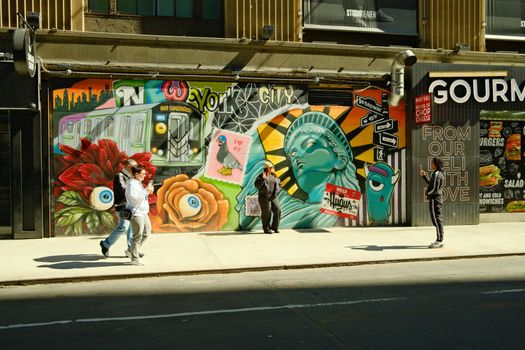 Photo: code mnml / Pexels
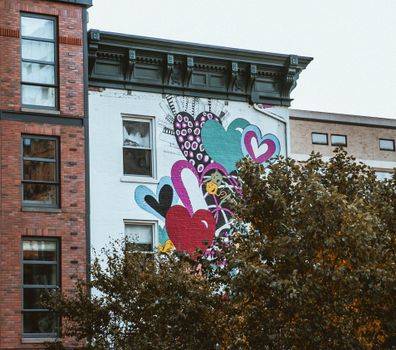 Photo: Louis / Pexels
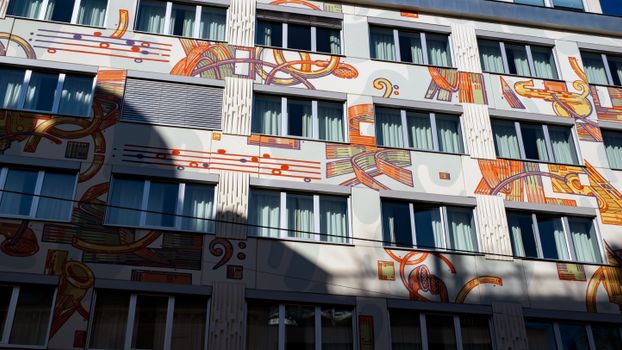 Photo: Eleonora Vokueva / Pexels