Unveiling the History of Renaissance Art: A Masterpiece Journey
history of renaissance art

Unveiling the History of Renaissance Art: A Masterpiece Journey

Embark on a captivating exploration of the artistic revolution that shaped Western civilization.

Begin Your Journey

Key Takeaways

  • ✓ The Renaissance period (c. 1300-1600) marked a rebirth of classical learning and artistic innovation.
  • ✓ Humanism, a focus on human potential and achievement, was a central philosophical theme.
  • ✓ Perspective, chiaroscuro, and sfumato were revolutionary artistic techniques developed during this era.
  • ✓ Florence, Italy, is often considered the birthplace and epicenter of early Renaissance art.

How It Works

1
Understanding the Context

Delve into the societal and cultural backdrop that fostered the Renaissance, including the decline of the Middle Ages and the rise of humanism. Grasping this foundation is crucial for appreciating the art.

2
Exploring Key Periods

Navigate through the Proto-Renaissance, Early Renaissance, High Renaissance, and Late Renaissance/Mannerism. Each period showcases distinct stylistic evolutions and artistic breakthroughs.

3
Discovering Master Artists

Familiarize yourself with the titans of Renaissance art, such as Giotto, Masaccio, Leonardo da Vinci, Michelangelo, and Raphael. Understand their individual contributions and revolutionary techniques.

4
Analyzing Artistic Innovations

Examine the groundbreaking techniques like linear perspective, anatomical accuracy, and the use of light and shadow. These innovations transformed art from symbolic representation to realistic depiction.

The Dawn of a New Era: Proto-Renaissance and Its Foundations
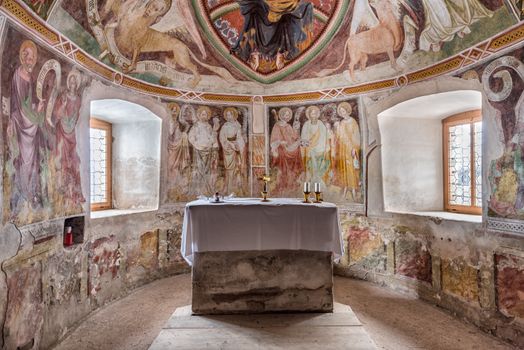
Interior view of a historic church with frescoes in Nova Ponente, Italy. Photo: Stefano Parisi / Pexels
The history of Renaissance art doesn't begin abruptly; it emerges from the fertile ground of the late Middle Ages, often referred to as the Proto-Renaissance. This foundational period, primarily in Italy during the 13th and 14th centuries, saw the first stirrings of a departure from the rigid, symbolic styles of Byzantine and Gothic art. The profound shift began with a renewed interest in classical antiquity, driven by scholars and artists who looked back to the glories of ancient Greece and Rome. This intellectual movement, known as Humanism, placed a new emphasis on human experience, individual achievement, and rational inquiry, moving away from a solely theological worldview. Instead of focusing exclusively on the divine, artists began to observe the natural world and human form with unprecedented scrutiny. One of the most pivotal figures of this era was Giotto di Bondone (c. 1267–1337). His revolutionary approach to painting introduced a sense of naturalism and emotional depth previously unseen. In works like the frescoes in the Scrovegni Chapel, Giotto abandoned the flat, gold-backed figures of Byzantine art, opting instead for figures with weight and volume, placed within convincing, albeit rudimentary, architectural settings. He experimented with perspective, suggesting three-dimensionality, and imbued his characters with genuine human emotion, making sacred narratives more relatable and impactful for viewers. His innovations laid the groundwork for future generations, showing that art could be a window into a more realistic and psychologically resonant world. This period also saw the rise of independent city-states in Italy, particularly Florence, Siena, and Venice, which fostered competitive artistic environments and provided patronage for innovative artists. Wealthy merchant families and the Church commissioned ambitious projects, creating a demand for new artistic expressions. The economic prosperity and intellectual ferment in these cities were crucial catalysts for the artistic explosion that would follow. The rediscovery of classical texts and philosophical ideas further fueled this artistic rebirth, inspiring artists to seek beauty, harmony, and proportion in their work, echoing the ideals of antiquity. The Proto-Renaissance, therefore, wasn't just a precursor; it was the essential first chapter in the grand narrative of Renaissance art, bravely challenging established artistic conventions and setting the stage for a revolution. For a deeper dive into the broader cultural context, explore this article on the evolution of Western art.

The Early Renaissance: Innovation and Mastery of Perspective
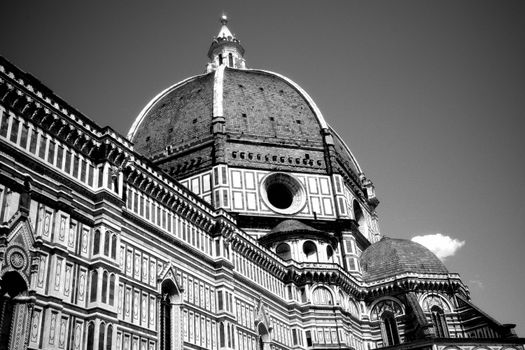
Stunning black-and-white photo of Florence Cathedral's dome, a masterpiece of architecture. Photo: ommy / Pexels
The Early Renaissance, spanning roughly from the early 15th century to the late 1400s, solidified the artistic breakthroughs initiated in the Proto-Renaissance and introduced even more radical innovations that fundamentally changed the course of art. This period is characterized by an intense commitment to scientific observation, mathematical precision, and a deeper understanding of human anatomy. Florence remained the vibrant heart of this artistic revolution, attracting and nurturing some of the most brilliant minds of the era. One of the most significant developments was the mastery of linear perspective. Filippo Brunelleschi, a brilliant architect, is credited with formally demonstrating the principles of linear perspective around 1415. This mathematical system allowed artists to create the illusion of three-dimensional space on a two-dimensional surface with astonishing accuracy, creating depth and realism never before achieved. This was not merely a technical trick; it was a conceptual shift, placing the viewer at a specific point in space and making the painted world feel tangible and immersive. Donato di Niccolò di Betto Bardi, known as Donatello (c. 1386–1466), revolutionized sculpture during this period. His bronze 'David' (c. 1440s) is a landmark work, being the first free-standing nude male sculpture since antiquity. It demonstrates a profound understanding of human anatomy and contrapposto (a naturalistic pose where the weight is shifted to one leg), endowing the figure with a sense of natural movement and psychological depth. Donatello's work exemplified the Humanist ideal, celebrating the beauty and potential of the human form. In painting, Masaccio (1401–1428) was a pivotal figure, despite his tragically short career. His frescoes in the Brancacci Chapel, particularly 'The Tribute Money', showcased a masterful application of linear perspective, chiaroscuro (the use of strong contrasts between light and dark), and a profound sense of psychological realism. His figures possessed weight and volume, and his compositions were dramatically structured, making the narrative incredibly powerful. Other important artists of this era include Fra Angelico, Paolo Uccello, and Andrea Mantegna, each contributing to the diverse tapestry of Early Renaissance art. Uccello, for instance, was obsessed with perspective, often making it the central subject of his works, while Mantegna brought a stark realism and dramatic intensity to his religious scenes. The commitment to naturalism extended to portraiture, with artists striving to capture the individual likeness and personality of their subjects. The patronage of powerful families like the Medici in Florence was instrumental in fostering this environment of innovation. Their commissions allowed artists to experiment and push boundaries, leading to an unparalleled flourishing of artistic genius. The Early Renaissance laid the crucial groundwork, perfecting techniques and developing a visual language that would be fully realized in the subsequent High Renaissance.

The Zenith of Artistic Achievement: The High Renaissance and Beyond
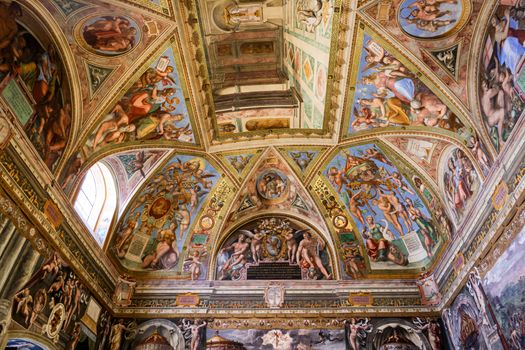
Captivating view of a Renaissance fresco-adorned vaulted ceiling, rich in detail and color. Photo: Magda Ehlers / Pexels
The High Renaissance, a relatively brief but intensely productive period from roughly the late 1490s to the 1520s, represents the absolute pinnacle of Renaissance art. During this golden age, the ideals of classical harmony, balance, and beauty reached their zenith, largely through the genius of three towering figures: Leonardo da Vinci, Michelangelo Buonarroti, and Raphael Sanzio. These masters not only perfected the techniques developed in the Early Renaissance but also imbued their works with an unprecedented level of emotional depth, psychological insight, and compositional grandeur. Leonardo da Vinci (1452–1519) was the quintessential Renaissance man – a painter, sculptor, architect, musician, scientist, inventor, and much more. His artistic innovations were profound. In works like the 'Mona Lisa', he mastered sfumato, a delicate blending of colors and tones to create soft, hazy transitions, giving his figures an ethereal quality and a sense of enigmatic life. His 'Last Supper' is a masterpiece of psychological drama, where each apostle's reaction to Christ's announcement is meticulously rendered, making it one of the most impactful narrative paintings in history. Leonardo's scientific curiosity deeply informed his art, particularly his anatomical studies, which contributed to the lifelike accuracy of his figures. Michelangelo Buonarroti (1475–1564) was a sculptor first and foremost, whose works exude immense power and pathos. His 'David' (1501–1504), a colossal marble statue, embodies the Humanist ideal of the perfect male form, showcasing his unparalleled skill in carving and his profound understanding of human anatomy and emotion. Beyond sculpture, Michelangelo's frescoes on the Sistine Chapel ceiling, particularly 'The Creation of Adam', are among the most iconic images in Western art. The sheer scale, complexity, and emotional intensity of these works are breathtaking, demonstrating his mastery of the human form in motion and his ability to convey profound theological messages. Raphael Sanzio (1483–1520), though dying young, left an indelible mark with his graceful and harmonious compositions. His 'School of Athens' in the Vatican's Apostolic Palace is a magnificent ode to classical philosophy and learning, showcasing his mastery of perspective, balance, and figure arrangement. Raphael's Madonnas are renowned for their serene beauty and tender humanity, combining idealization with a deeply felt emotional resonance. His work often synthesized the best elements of Leonardo's sfumato and Michelangelo's monumentality, creating a style of exquisite clarity and grace. As the High Renaissance drew to a close, a new style emerged, known as Mannerism (roughly 1520–1600). This period saw artists like Pontormo, Parmigianino, and El Greco begin to deliberately deviate from the harmonious ideals of the High Renaissance. Mannerist art often featured elongated figures, exaggerated poses, artificial colors, and complex, sometimes unsettling, compositions. It was a reaction to the perfection of the High Renaissance, seeking new forms of expression and often conveying a sense of intellectual sophistication or emotional tension. The influence of the High Renaissance, however, continued to reverberate throughout subsequent centuries, shaping art movements far beyond Italy's borders. To understand the broader artistic movements that followed, one might explore the Baroque period and its dramatic expressions.

The Enduring Legacy and Impact of Renaissance Art
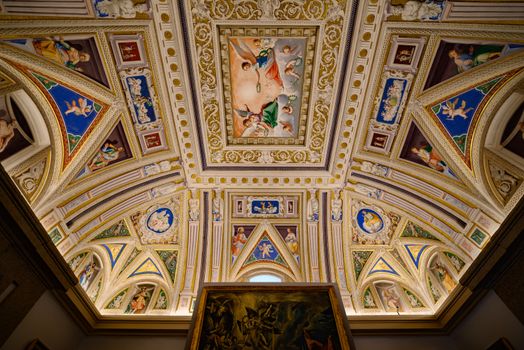
Stunning Renaissance ceiling fresco with vibrant colors and detailed artistry in Madrid, Spain. Photo: Osviel Rodriguez Valdés / Pexels
The history of Renaissance art is not merely a chronicle of past masterpieces; it is a narrative of profound influence that continues to shape our understanding of art, culture, and human potential. The innovations of the Renaissance period laid the foundational principles for much of Western art that followed, setting new standards for realism, perspective, anatomy, and emotional expression. Its impact can be seen in numerous ways: * **Revolution in Artistic Technique:** The systematic development of linear perspective transformed painting, allowing for the creation of convincing three-dimensional space on a two-dimensional surface. Chiaroscuro and sfumato introduced new ways of rendering light, shadow, and atmospheric effects, adding depth and realism to figures and landscapes. The meticulous study of human anatomy, often through dissection, led to an unprecedented accuracy in depicting the human form in both painting and sculpture. These techniques became essential tools for artists for centuries. * **Shift in Subject Matter and Patronage:** While religious themes remained prominent, the Renaissance saw a significant increase in secular subjects, including mythology, history, and portraiture. The rise of wealthy merchant families and private patrons, alongside the Church, broadened the scope of artistic commissions and allowed for greater artistic freedom and experimentation. This shift reflected the Humanist emphasis on human achievements and the natural world. * **Elevated Status of the Artist:** Before the Renaissance, artists were largely considered skilled artisans. The intellectual and creative genius displayed by figures like Leonardo, Michelangelo, and Raphael elevated the status of the artist to that of an intellectual and a genius. This recognition fostered a new respect for artistic creation and paved the way for the modern concept of the artist as a celebrated individual. * **Influence on Subsequent Art Movements:** The ideals of balance, harmony, and proportion championed by the High Renaissance directly influenced the Neoclassical movement centuries later. Even movements that reacted against Renaissance principles, like Mannerism and later the Baroque, did so by building upon or deliberately distorting the foundations laid by Renaissance masters. The Renaissance provided a common visual vocabulary that artists would engage with, adapt, or challenge. * **Cultural and Intellectual Impact:** Beyond art, the Renaissance fostered a broader cultural rebirth that impacted literature, philosophy, science, and politics. The renewed interest in classical learning encouraged critical thinking and inquiry, contributing to the Scientific Revolution and the Age of Enlightenment. The art itself served as a powerful medium for communicating new ideas and values, reflecting a changing worldview. * **Preservation and Legacy:** Many Renaissance masterpieces have endured for centuries, becoming cornerstones of global art collections and inspiring countless artists and admirers. They serve as timeless testaments to human creativity and ingenuity, offering insights into the values and aspirations of an era that profoundly shaped Western civilization. The legacy of Renaissance art is not static; it continues to be studied, reinterpreted, and celebrated, proving its enduring relevance and power.

Comparison

Artistic PeriodKey CharacteristicsDominant LocationNotable Artists
Proto-RenaissanceEarly naturalism, emotional depth, break from Byzantine flatnessFlorence, SienaGiotto, Cimabue, Duccio
Early RenaissanceMastery of linear perspective, anatomical accuracy, HumanismFlorenceMasaccio, Donatello, Brunelleschi
High RenaissanceHarmony, balance, idealized beauty, psychological depthFlorence, RomeLeonardo da Vinci, Michelangelo, Raphael
MannerismElongated figures, artificiality, complex compositions, emotional tensionItaly (various centers)Pontormo, Parmigianino, El Greco

What Readers Say

"This article on the history of Renaissance art is truly exceptional. It breaks down complex periods and artists into understandable, engaging prose. I feel like I've just taken a college-level course in a fraction of the time, and I appreciate the depth of detail without being overwhelming."

Eleanor Vance · New York, NY

"As an art enthusiast, I'm always looking for comprehensive resources, and this piece delivered. The flow from Proto-Renaissance through Mannerism was seamless, and the emphasis on key innovations was incredibly helpful. A must-read for anyone interested in this pivotal era."

Marcus Chen · Los Angeles, CA

"I've always struggled to keep track of the different Renaissance periods, but this guide clarified everything. After reading it, I visited a museum and could actually identify stylistic elements and discuss artists with new confidence, which was a fantastic result!"

Sophia Rodriguez · Chicago, IL

"While incredibly informative and well-written, I would have loved to see a slightly more detailed section on the regional differences outside of Florence and Rome, perhaps touching on the Venetian school more. Nonetheless, it's an outstanding overview of the history of Renaissance art."

David Kim · Houston, TX

"I'm a student writing a paper on artistic movements, and this article was an invaluable starting point. The way it connected the art to the broader Humanist philosophy really helped me frame my arguments. It's clear, concise, and incredibly well-researched."

Isabelle Dubois · Miami, FL

Frequently Asked Questions

What defines the Renaissance period in art?

The Renaissance in art is defined by a renewed interest in classical antiquity, a focus on humanism, the development of linear perspective, anatomical accuracy, and a move towards greater realism and emotional depth. It marked a significant departure from the symbolic art of the Middle Ages, emphasizing harmony, balance, and the beauty of the human form.

Was Renaissance art solely religious?

While religious themes remained very prominent and important, Renaissance art was not solely religious. There was a significant rise in secular subjects, including mythological scenes, historical narratives, allegories, and portraiture. This diversification reflected the Humanist focus on human achievement and the natural world, alongside the divine.

How did artists achieve realism in Renaissance art?

Renaissance artists achieved realism through several key innovations. They developed and mastered linear perspective to create the illusion of three-dimensional space, studied human anatomy extensively (often through dissection) for accurate representation, and employed techniques like chiaroscuro (light and shadow) and sfumato (soft transitions) to render figures and objects with greater volume and naturalism.

What was the role of patronage in Renaissance art?

Patronage played a crucial role in Renaissance art. Wealthy merchant families (like the Medici), powerful popes, and civic governments commissioned ambitious artworks, providing financial support and creative freedom for artists. This system fostered competition, innovation, and allowed artists to dedicate themselves to large-scale projects, driving the artistic revolution.

How does Renaissance art differ from Gothic art?

Renaissance art differs from Gothic art in several fundamental ways. Gothic art often featured elongated, stylized figures, less developed perspective, and a focus on spiritual symbolism. Renaissance art, in contrast, emphasized naturalism, anatomical accuracy, mathematical perspective, and a balance between the spiritual and the human, placing figures in more realistic and psychologically resonant settings.

Who should study the history of Renaissance art?

Anyone with an interest in art, history, philosophy, or cultural development should study the history of Renaissance art. It is essential for art students, historians, cultural enthusiasts, travelers planning trips to Italy, and anyone seeking to understand the foundations of Western artistic and intellectual thought. It offers profound insights into human creativity and societal change.

Are there any controversies surrounding Renaissance art?

Yes, like any historical period, Renaissance art has its controversies. These can include debates over attribution of works, the ethics of artistic patronage (especially from powerful families or the Church), the treatment of certain subjects, and the often-overlooked contributions of female artists or artists from outside major centers. Modern interpretations also critically examine the period's social and political contexts.

What is the future trend in appreciating Renaissance art?

The future trend in appreciating Renaissance art involves increasingly using digital technologies for conservation, restoration, and interactive viewing experiences. Virtual reality and augmented reality are making these masterpieces more accessible globally, allowing for new forms of study and engagement, while scholarly research continues to uncover new historical contexts and interpretations.

Embark on your own journey through the history of Renaissance art. Discover the masterpieces, understand the innovations, and connect with the enduring legacy that continues to inspire. Start exploring today and deepen your appreciation for this pivotal era.

Topics: history of renaissance artrenaissance art originsrenaissance art characteristicsrenaissance artistsimpact of renaissance art
Leo List

IE Escorts NO Escorts US Escorts NZ Escorts AU Escorts
Brampton weed
Adultwork EstrelaBet Vai de Bet R7 Bet Betão Galera Bet Rainbet Bet9ja Shop SportyBet BetKing Sisal Loto Foot Hollywoodbets YesPlay Odibets RushBet Jugabet BetWarrior BetCity MSport betPawa Fortebet