Unveiling the Legacy: Famous Renaissance Artists and Works
Dive into the masterpieces and revolutionary minds that shaped one of history's most transformative artistic periods.
Discover the MastersKey Takeaways
- ✓ The Renaissance, meaning 'rebirth,' spanned roughly from the 14th to the 17th century.
- ✓ It originated in Italy and marked a profound cultural shift towards humanism and classical revival.
- ✓ Key artistic innovations included perspective, chiaroscuro, and sfumato.
- ✓ The High Renaissance (c. 1490-1527) is considered the peak of artistic achievement.
How It Works
The Renaissance wasn't just an art movement; it was a cultural, intellectual, and scientific rebirth. Understanding the historical backdrop of economic growth, rediscovery of classical texts, and philosophical shifts is crucial to appreciating its art.
Artists developed groundbreaking techniques like linear perspective, which created the illusion of depth, and chiaroscuro, the use of strong contrasts between light and dark. These innovations allowed for unprecedented realism and emotional depth in their works.
Focus on the 'Big Three' – Leonardo da Vinci, Michelangelo, and Raphael – but also explore precursors like Giotto and Donatello, and later Venetian masters. Each artist brought a unique vision and technique to the era's artistic landscape.
Delve into specific masterpieces, examining their composition, symbolism, and the stories they tell. Consider 'Mona Lisa,' 'David,' 'The Last Supper,' and 'The School of Athens' to grasp the breadth and impact of Renaissance artistic genius.
The Dawn of a New Era: Early Renaissance Innovations
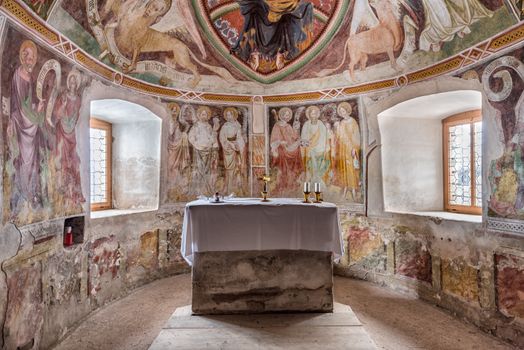 Photo: Stefano Parisi / Pexels
The Titans of the High Renaissance: Leonardo, Michelangelo, and Raphael
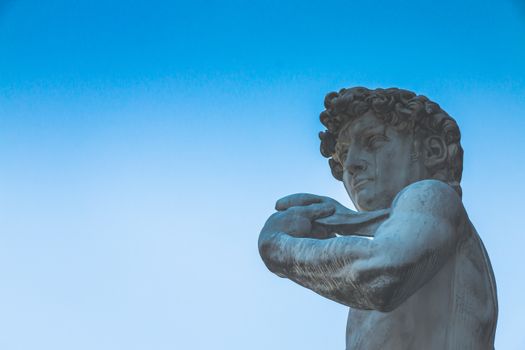 Photo: Mo Hassanein / Pexels
Beyond Italy: The Northern Renaissance and its Unique Contributions
 Photo: Antoni Shkraba / AI25.studio / Pexels
Beyond the Canvas: Sculptors, Architects, and the Lasting Legacy
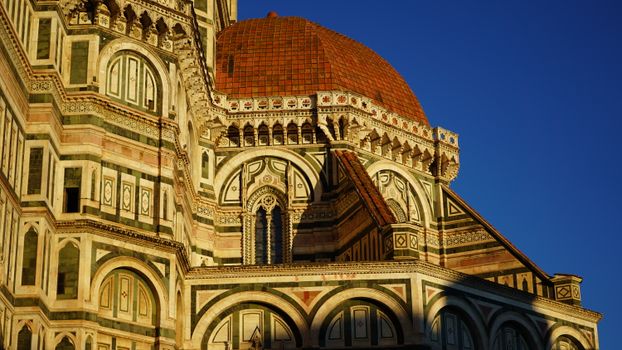 Photo: adam rozanski / Pexels
Comparison
| Feature | Italian Renaissance | Northern Renaissance | Mannerism |
|---|---|---|---|
| Geographic Focus | Italy (Florence, Rome, Venice) | Low Countries, Germany, France | Italy |
| Dominant Medium | Fresco, Marble Sculpture | Oil Painting, Woodcuts | Oil Painting, Sculpture |
| Key Characteristics | Idealism, Harmony, Classical forms, Perspective, Humanism | Realism, Detail, Symbolism, Everyday life, Intense Emotion | Elongated forms, Artificiality, Unnatural colors, Complex compositions |
| Key Figures | Leonardo, Michelangelo, Raphael | Van Eyck, Dürer, Holbein | Pontormo, Parmigianino, El Greco |
What Readers Say
"This article provided such a comprehensive overview of famous Renaissance artists and works. I feel like I finally understand the differences between the Italian and Northern movements."
Sophia R. · New York, NY"As an art history enthusiast, I appreciated the depth and detail. The breakdown of Leonardo, Michelangelo, and Raphael's contributions was particularly insightful and well-articulated."
Mark T. · Chicago, IL"I used this guide for a research project on famous Renaissance artists and works, and it helped me structure my arguments effectively. My professor even complimented my understanding of the period's nuances!"
Elena P. · Los Angeles, CA"Very informative, though I would have loved even more examples of architectural masterpieces. Still, an excellent resource for anyone looking to deepen their knowledge of Renaissance art."
David L. · Boston, MA"The sections on early Renaissance innovations really helped me grasp the foundational changes that led to the High Renaissance. It's great to see the progression clearly explained."
Jessica M. · Houston, TXFrequently Asked Questions
Who are considered the 'Big Three' famous Renaissance artists?
The 'Big Three' of the High Renaissance are widely recognized as Leonardo da Vinci, Michelangelo Buonarroti, and Raphael Sanzio. These three masters, working primarily in Italy, are celebrated for their unparalleled artistic genius, innovative techniques, and the profound impact of their works on Western art and culture, collectively defining the apex of the Renaissance period.
What makes Renaissance art different from Medieval art?
Renaissance art distinguished itself from Medieval art through its emphasis on humanism, realism, and a revival of classical Greek and Roman ideals. Medieval art was often more symbolic and two-dimensional, focused on religious narratives, while Renaissance art introduced linear perspective, chiaroscuro, and anatomical accuracy to create more lifelike, three-dimensional representations of the human form and natural world, expressing individual emotion and psychological depth.
How did linear perspective change Renaissance art?
Linear perspective was a revolutionary technical innovation developed in the Early Renaissance (attributed to Brunelleschi and Masaccio) that allowed artists to create the illusion of three-dimensional space on a two-dimensional surface. By using a vanishing point and orthogonal lines, artists could accurately depict depth and distance, making their paintings appear more realistic and drawing viewers into the scene with unprecedented spatial coherence.
What was the role of patrons in supporting famous Renaissance artists and works?
Patrons, primarily wealthy families (like the Medici), the Church (including popes), and powerful rulers, played an absolutely crucial role in funding and commissioning famous Renaissance artists and works. Their patronage provided artists with financial stability, materials, and opportunities to create monumental projects, thereby driving artistic innovation and allowing the Renaissance to flourish as a period of unprecedented artistic output.
How did the Northern Renaissance differ from the Italian Renaissance?
While both shared humanist ideals, the Northern Renaissance, centered in regions like the Low Countries and Germany, often emphasized meticulous detail, intense realism, and a focus on everyday life and religious symbolism within domestic settings, often utilizing oil painting to achieve luminous colors and fine textures. The Italian Renaissance, conversely, focused more on classical antiquity, idealized human forms, monumental scale, and fresco painting.
Who should learn about famous Renaissance artists and works?
Anyone with an interest in art history, cultural studies, European history, or simply appreciating beautiful and historically significant art should delve into famous Renaissance artists and works. It's essential knowledge for students, art enthusiasts, travelers planning trips to Italy or other European destinations, and anyone seeking to understand the foundational shifts that shaped modern Western thought and aesthetics.
Was there any risk for artists during the Renaissance?
Yes, Renaissance artists faced various risks. Beyond the physical dangers of working on large-scale frescoes (like Michelangelo on the Sistine Chapel ceiling) or handling toxic pigments, artists were also subject to the whims of powerful patrons, political and religious scrutiny, and potential financial instability. Their artistic choices could sometimes lead to controversy or even persecution, especially during periods of religious upheaval like the Reformation.
What is the future trend in appreciating Renaissance art?
The appreciation of Renaissance art is increasingly enhanced by digital technologies. Virtual reality tours, high-resolution online archives, and interactive exhibits are making these famous Renaissance artists and works more accessible globally. Future trends will likely involve more immersive digital experiences, AI-powered analyses of techniques, and continued scholarly reinterpretation of their cultural and historical significance, ensuring their relevance for generations to come.
Embark on your own journey through history and art. Explore the unparalleled genius of famous Renaissance artists and works, and allow their timeless masterpieces to enrich your understanding of human creativity and the enduring power of art.