Unveiling Famous American Artists History & Impact

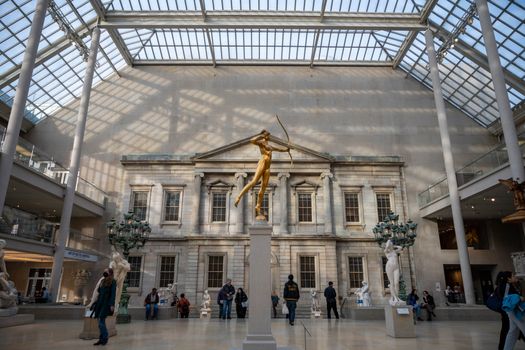
Elegant interior shot of The Met's sculpture gallery showcasing classical architecture and sculptures.Photo: Quang Vuong / Pexels

Unveiling Famous American Artists History & Impact

Journey through centuries of American creativity, discovering the visionaries who shaped our nation's artistic soul.

Discover Their Legacies

Key Takeaways

  • ✓ American art began with colonial portraiture, serving practical and social functions.
  • ✓ The Hudson River School defined a unique American landscape aesthetic in the 19th century.
  • ✓ The Ashcan School brought realism to urban life, challenging academic traditions.
  • ✓ Abstract Expressionism, born in NYC, marked America's rise as a global art center.

How It Works

1
Explore Historical Periods

Understand the major eras of American art, from pre-colonial indigenous expressions to contemporary movements. Each period reflects societal changes and artistic innovations.

2
Identify Key Artists & Works

Learn about the seminal artists within each period and their most significant contributions. This helps contextualize their impact and influence on subsequent generations.

3
Analyze Artistic Movements

Delve into the characteristics, philosophies, and driving forces behind movements like Romanticism, Realism, and Pop Art. Recognize how these movements shaped the American artistic identity.

4
Connect Art to Culture

Grasp how famous American artists history is intertwined with the nation's social, political, and economic development. Art often serves as a mirror and a catalyst for cultural evolution.

The Dawn of American Art: Colonial & Early Republic Masters

The story of famous American artists history begins long before the United States was formally established, with indigenous artistry expressing rich cultural narratives through pottery, textiles, and ceremonial objects. However, what we typically recognize as the 'beginning' of American art often refers to the European colonial period, marked by a utilitarian approach to painting. Early colonial artists, largely self-taught or trained in European workshops, primarily focused on portraiture. These works served not only to document individuals but also to assert social status and lineage in a burgeoning society. Artists like John Singleton Copley (1738-1815) stand out during this era. Copley, known for his ability to capture the psychological depth and material textures of his subjects, produced iconic works such as 'Paul Revere' and 'Mrs. Thomas Boylston'. His style, while rooted in European traditions, began to show a distinct American sensibility, characterized by a directness and lack of pretension. Following the American Revolution, the need for a national identity spurred artists to document historical events and portray national heroes. Gilbert Stuart (1755-1828) became synonymous with the presidential portrait, most notably his unfinished 'Athenaeum Portrait' of George Washington, which has graced the dollar bill for over a century. Other significant figures like Charles Willson Peale (1741-1827) were not only painters but also naturalists, inventors, and museum founders, embodying the Enlightenment ideals of the new nation. Peale’s 'The Artist in His Museum' is a powerful self-portrait that encapsulates his multifaceted contributions to American culture and science. This early period laid the groundwork, establishing the role of art in shaping national consciousness and personal identity. The emphasis was on clear representation, often infused with moral or patriotic undertones, reflecting the values of a society striving to define itself. These foundational artists, though often working in styles derived from Europe, began to infuse their work with a distinct American spirit, setting the stage for future generations to explore themes uniquely tied to the nation's experience. Their meticulous craftsmanship and commitment to capturing their subjects with honesty and dignity provided a strong starting point for the complex tapestry that is American arts history. This early period was crucial for establishing the visual language and patronage systems that would support the growth of more diverse artistic expressions in the centuries to come, moving from mere documentation to more profound artistic exploration.

Romanticism & The Wild Frontier: 19th-Century American Art Movements

The 19th century witnessed a dramatic expansion of the American landscape and, with it, a burgeoning artistic movement that sought to capture its grandeur and spiritual significance: the Hudson River School. This group of landscape painters, led by Thomas Cole (1801-1848) and later Frederic Edwin Church (1826-1900), celebrated the sublime beauty of the American wilderness, often imbuing their majestic vistas with moral and religious messages. Cole's 'The Oxbow' perfectly illustrates their blend of detailed observation and allegorical narrative, depicting the untamed wildness contrasting with the cultivated land. Church's expansive canvases, like 'The Heart of the Andes', transported viewers to exotic, unspoiled territories, showcasing a distinctly American brand of Romanticism that emphasized discovery and manifest destiny. Their work wasn't just about painting scenery; it was about defining the American identity through its vast, awe-inspiring natural world. Simultaneously, other artists explored different facets of American life. The genre painting, depicting scenes of everyday life, gained popularity with artists like George Caleb Bingham (1811-1879), who captured the vibrant activity of the American frontier in works such as 'Fur Traders Descending the Missouri'. Winslow Homer (1836-1910), initially an illustrator for Harper's Weekly during the Civil War, later transitioned to painting powerful scenes of rural life and the sea. His work, like 'Snap the Whip' and 'The Gulf Stream', is characterized by its stark realism and emotional depth, often exploring themes of resilience and man's struggle against nature. Homer's ability to render light and atmosphere with such precision made his works resonate deeply with the American public. The latter half of the 19th century also saw American artists engaging more deeply with European art centers. James McNeill Whistler (1834-1903) and John Singer Sargent (1856-1925) spent much of their careers abroad, yet their contributions are undeniably part of famous American artists history. Whistler, known for his tonalist approach and emphasis on aesthetic harmony, challenged traditional narrative painting with works like 'Arrangement in Grey and Black No. 1 (Whistler's Mother)'. Sargent, a master portraitist, captured the elegance and sophistication of the Gilded Age elite with his dazzling brushwork and psychological insight, as seen in 'Madame X'. These artists, while influenced by European trends, brought back a refined sensibility and technical mastery that elevated American art on the global stage, bridging the gap between national narratives and international artistic dialogues.

Modernism Takes Hold: From Ashcan to Abstract Expressionism

As the 20th century dawned, famous American artists history took a sharp turn towards modernism, reflecting the rapid industrialization, urbanization, and societal shifts occurring across the nation. The Ashcan School, emerging in the early 1900s, represented a radical departure from the genteel academic art of the past. Artists like Robert Henri (1865-1929), George Bellows (1882-1925), and John Sloan (1871-1951) rejected idealized subjects, instead choosing to depict the gritty realities of urban life in New York City. Their canvases teemed with immigrants, laborers, and bustling street scenes, offering an unflinching, energetic portrayal of modern American existence. Bellows' 'Stag at Sharkey's' captures the raw energy of a boxing match, while Sloan's 'Wake of the Ferry' illustrates the mundane beauty of city dwellers. Their work was controversial but undeniably vital in expanding the scope of what was considered 'art'. The interwar period saw the rise of various distinct American modernisms. Precisionism, with artists like Charles Demuth (1883-1935) and Charles Sheeler (1883-1965), celebrated the clean lines and geometric forms of American industry and architecture, as seen in Demuth's 'My Egypt'. Regionalism, a movement from the 1930s, reacted against European modernism by focusing on uniquely American subjects and styles, often depicting rural life and small-town America. Grant Wood's (1891-1942) iconic 'American Gothic' and Thomas Hart Benton's (1889-1975) dynamic murals are prime examples, embodying a sense of national identity during the Great Depression. Edward Hopper (1882-1967), though not strictly aligned with a single movement, captured the alienation and quiet drama of American life with his stark, atmospheric paintings like 'Nighthawks'. However, it was after World War II that American art achieved global dominance with the emergence of Abstract Expressionism. Centered in New York City, this movement marked a radical shift, placing emphasis on emotional intensity, spontaneity, and the act of painting itself. Jackson Pollock (1912-1956), with his revolutionary 'drip' technique, transformed the canvas into an arena for action and gesture, creating monumental works like 'Autumn Rhythm (Number 30)'. Mark Rothko (1903-1970) explored spiritual transcendence through his luminous fields of color, aiming to evoke profound emotional responses. Willem de Kooning (1904-1997) fused abstraction with figuration, producing powerful and often unsettling 'Woman' series. This period not only cemented New York as the new capital of the art world but also profoundly influenced subsequent generations of artists worldwide, pushing the boundaries of artistic expression and establishing a new paradigm for what art could be.

Contemporary Visionaries: Pop Art to Postmodernism and Beyond

The latter half of the 20th century and into the 21st has seen an explosion of diverse artistic practices that continue to shape famous American artists history. Pop Art, emerging in the 1950s and 60s, challenged the introspective nature of Abstract Expressionism by embracing popular culture, consumerism, and mass media. Andy Warhol (1928-1987) became its most iconic figure, transforming everyday objects like Campbell's soup cans and celebrity portraits into high art, blurring the lines between art and commerce. Roy Lichtenstein (1923-1997) appropriated comic strip imagery, using benday dots to comment on media and perception. These artists brought wit, irony, and a democratic spirit to the art world, making art accessible while simultaneously critiquing modern society. Following Pop Art, various movements like Minimalism, Conceptual Art, and Performance Art further expanded the definition of art. Donald Judd (1928-1994) defined Minimalism with his precise, geometric forms and emphasis on material and space. Conceptual artists like Sol LeWitt (1928-2007) prioritized ideas over aesthetics, asserting that the concept behind a work was more important than the finished object. The 1970s and 80s saw the rise of Postmodernism, questioning grand narratives and embracing pastiche and appropriation. Artists like Cindy Sherman (b. 1954) explored identity and representation through her iconic 'Untitled Film Stills', while Jean-Michel Basquiat (1960-1988) brought raw energy, social commentary, and a unique blend of street art and Neo-expressionism to the forefront. Today, American art is characterized by its immense diversity, global interconnectedness, and engagement with pressing social and political issues. Artists like Kara Walker (b. 1969) confront race, gender, and history through powerful silhouettes and installations. Jeff Koons (b. 1955) continues to explore consumer culture and kitsch with his highly polished, monumental sculptures. The digital revolution has also opened new avenues for artistic expression, with artists integrating technology, virtual reality, and interactive elements into their practices. The ongoing narrative of famous American artists history is one of constant evolution, challenging conventions, reflecting societal changes, and perpetually redefining what art means in a complex and ever-changing world. It is a testament to the enduring power of human creativity and its essential role in cultural dialogue.

Comparison

Art MovementKey CharacteristicsInfluential ArtistsCultural Impact
Hudson River SchoolRomantic landscapes, sublime nature, moral allegoriesThomas Cole, Frederic Edwin ChurchDefined American identity through nature, fostered conservation
Ashcan SchoolUrban realism, gritty everyday life, social commentaryRobert Henri, George Bellows, John SloanDemocratized art subjects, challenged academic traditions
Abstract ExpressionismEmotional intensity, spontaneity, action painting, color fieldsJackson Pollock, Mark Rothko, Willem de KooningEstablished NYC as art capital, global influence on modern art
Pop ArtConsumerism, mass media, popular culture imagery, ironyAndy Warhol, Roy LichtensteinBlurred lines between high/low art, reflected post-war society

What Our Readers Say

5 ★★★★★

"This article provided such a comprehensive overview of famous American artists history. I particularly enjoyed learning about the progression from colonial portraits to the groundbreaking Abstract Expressionists. It's incredibly well-researched and engaging."

5 ★★★★★

"As an art student, I found this resource invaluable. It neatly categorizes the different periods and highlights the most crucial figures and movements. A fantastic foundation for understanding the depth of American artistic contributions."

5 ★★★★★

"I always struggled to connect the dots in American art, but this article made the famous American artists history so clear and logical. Now I feel much more confident discussing major artists and their impact, especially with the detailed descriptions of each era."

4 ★★★★☆

"While incredibly thorough, I would have loved to see a bit more on contemporary Indigenous American artists. However, the existing content on the major historical movements is exceptionally well-written and very informative. A great starting point for anyone curious."

5 ★★★★★

"Living in NYC, I often visit museums, and this article gave me a much deeper appreciation for the works I see. Understanding the famous American artists history helps me connect with the art on a whole new level. Highly recommend for any art enthusiast!"

Frequently Asked Questions

What is considered the starting point of famous American artists history?
While indigenous art traditions predate European arrival, the commonly recognized starting point for American art history, in the Western sense, is the colonial period, focusing on portraiture by artists like John Singleton Copley and Gilbert Stuart. These early works served practical purposes for identity and social status within the nascent colonies and early republic.
Why did American art shift from realism to abstraction?
The shift from realism to abstraction in American art was a complex evolution driven by societal changes, technological advancements (like photography reducing the need for realistic depiction), and a desire for artists to express inner emotional states rather than just external realities. Movements like Abstract Expressionism aimed to convey universal human experiences and emotions, making New York a global art hub after WWII.
How did the Hudson River School influence American identity?
The Hudson River School profoundly influenced American identity by celebrating the vast, untamed American wilderness as a symbol of national character and divine presence. Their majestic landscapes fostered a sense of awe and pride in the unique beauty of the American continent, contributing to ideas of manifest destiny and inspiring early conservation efforts, linking the nation's spirit to its natural grandeur.
Is American art history primarily influenced by European art?
Historically, American art was heavily influenced by European traditions, especially in its early stages. However, over time, American artists developed unique styles and movements that diverged significantly, often reflecting distinct American experiences, landscapes, and social dynamics. By the mid-20th century, with movements like Abstract Expressionism, American art became a dominant global influence, reversing the earlier dynamic.
How does Pop Art challenge traditional notions of art?
Pop Art challenged traditional notions of art by incorporating imagery from popular culture, advertising, and everyday consumer products into fine art. Artists like Andy Warhol and Roy Lichtenstein deliberately blurred the lines between 'high' and 'low' culture, questioning the elitism of the art world and commenting on the pervasive influence of mass media and consumerism in modern American society.
Who should explore famous American artists history?
Anyone with an interest in art, history, or American culture should explore famous American artists history. It's particularly beneficial for students, art enthusiasts, museum-goers, and those seeking a deeper understanding of how visual culture has shaped and reflected the evolving identity of the United States.
Are there risks in simplifying complex art movements?
While simplification can make complex art movements more accessible, there is a risk of overgeneralization or omitting nuanced details that are crucial to a full understanding. Art history is rich with individual variations and cross-currents, and a simplified approach might unintentionally overlook the diverse perspectives and internal debates within each movement.
What are future trends in American art?
Future trends in American art are likely to continue embracing digital technologies, virtual reality, and AI, while also maintaining a strong focus on social and political commentary, identity politics, and environmental concerns. Global influences will remain significant, leading to increasingly diverse and hybrid artistic forms that challenge traditional boundaries and engage with contemporary issues on a global scale.

Embark on a captivating journey through famous American artists history. From colonial portraits to groundbreaking abstract works, discover the enduring legacy and profound cultural impact of the artists who have shaped the American artistic landscape. Start your exploration today and deepen your appreciation for this rich heritage.

Topics: famous American artists historyAmerican art movementsiconic American paintershistory of US artinfluential American artists
Leo List
Brampton weed
Adultwork