✓ The 20th century saw American art shift from European imitation to global leadership.
✓ Movements like Abstract Expressionism and Pop Art originated in the US, gaining international acclaim.
✓ Artists often responded to social, political, and economic changes, reflecting American identity.
✓ Key figures include Georgia O'Keeffe, Jackson Pollock, Andy Warhol, and Edward Hopper.
How It Works
1
Understanding the Context
The 20th century was a period of immense change globally and within the United States. Artists responded to industrialization, two World Wars, the Great Depression, the Civil Rights Movement, and the rise of consumer culture, all of which profoundly influenced their creative output and thematic choices.
2
Exploring Key Movements
American art evolved through distinct movements, each leaving an indelible mark. From early modernism and regionalism to the revolutionary Abstract Expressionism, Pop Art, and Minimalism, these styles reflect a dynamic artistic landscape. Understanding these movements is crucial to appreciating individual artists.
3
Spotlighting Influential Artists
This article highlights seminal figures whose contributions transcended their specific styles. Their innovative techniques, profound subject matter, and often rebellious spirits carved out new pathways for artistic expression, establishing American art as a dominant force on the world stage.
4
Recognizing Lasting Impact
The legacy of these 20th-century American artists continues to resonate today. Their works are celebrated in museums worldwide, inspire contemporary artists, and offer critical insights into the American experience. Their influence is a testament to their enduring creativity and vision.
Pioneers of American Modernism and Realism
Photo: Huy Nguyễn / Pexels
The dawn of the 20th century saw American artists grappling with their identity, often looking to European avant-garde movements for inspiration while simultaneously striving to forge a distinctly American aesthetic. This period was characterized by a tension between embracing the new and honoring traditional, often realistic, depictions of American life and landscapes. Artists like Georgia O'Keeffe, born in 1887, emerged as a towering figure, known for her pioneering contributions to American modernism. Her iconic works, particularly her magnified floral paintings, cityscapes, and depictions of New Mexico landscapes, transcended mere representation, delving into abstraction and emotional resonance. O'Keeffe’s ability to distill natural forms into their purest essence, emphasizing color, line, and composition, made her a unique voice. Her explorations of the American Southwest, transforming bones, rocks, and desert flora into powerful symbols, cemented her status as an artist deeply connected to the American land. Her work challenged perceptions of scale and subject matter, inviting viewers to see the world anew through her distinctive lens.
Another seminal figure, though stylistically distinct, was Edward Hopper (1882-1967). Hopper became the quintessential painter of American urban and rural scenes, capturing moments of quiet contemplation, isolation, and psychological introspection. His realist approach, marked by stark lighting, geometric precision, and an almost cinematic quality, transformed ordinary scenes—diners, gas stations, hotel rooms, and solitary figures—into profound meditations on modern life. His most famous work, 'Nighthawks' (1942), epitomizes his ability to convey a sense of melancholic beauty and urban alienation, making it one of the most recognizable paintings in American art. Hopper’s influence extends beyond painting, deeply impacting film and photography with his masterful use of light and shadow to evoke mood and narrative.
Grant Wood (1891-1942), a leading proponent of Regionalism, offered a contrasting yet equally significant contribution. His work, most famously 'American Gothic' (1930), became an enduring symbol of American rural resilience and character. Regionalists aimed to capture the essence of American life in the heartland, often with a sense of pride and nostalgia, pushing back against the perceived elitism of European modernism. Wood’s meticulous detail and somewhat stylized approach provided a counter-narrative to the abstract leanings emerging elsewhere, celebrating the everyday struggles and dignity of ordinary Americans. These artists, despite their varied styles and subjects, collectively laid the groundwork for a truly American art, distinguishing it from its European predecessors and setting the stage for future innovation. They explored themes of identity, landscape, and the human condition, defining a visual language that resonated deeply within the United States and began to capture international attention. Their work continues to be studied for its profound insights into the evolving American psyche. For more on the broader context of artistic movements, explore the history of art movements.
The Abstract Expressionist Revolution
Photo: Steve A Johnson / Pexels
Mid-century America witnessed an artistic earthquake: the rise of Abstract Expressionism. This movement, largely centered in New York City, marked a profound shift in the global art landscape, establishing American art as a dominant force for the first time. After World War II, many artists felt a need for a new visual language that could express the profound anxieties, traumas, and existential questions of the era. They moved away from representational art, embracing abstraction as a means of conveying raw emotion and subconscious thought. The canvas became an arena for action, a space where the artist's inner world could be directly manifested through gesture, color, and texture.
Jackson Pollock (1912-1956) stands as the quintessential figure of Abstract Expressionism, particularly known for his revolutionary 'drip' paintings. Abandoning traditional easels and brushes, Pollock would lay his canvases on the floor, pouring, dripping, and splattering paint onto them from above. This 'action painting' technique was not random; it was a highly controlled and intensely physical process, a direct extension of his body and mind onto the canvas. His works, like 'Convergence' (1952) or 'Number 1A, 1948', are vast, intricate tapestries of interwoven lines and colors, reflecting a tumultuous energy and a deeply personal exploration of form and non-form. Pollock’s method redefined the very act of painting, emphasizing process over product and making the artist’s gesture an integral part of the artwork itself.
Alongside Pollock, Willem de Kooning (1904-1997) was another titan of the movement, known for his powerful, often aggressive, brushwork and his oscillation between abstraction and figuration. While many Abstract Expressionists fully embraced non-objectivity, de Kooning often retained hints of the human form, particularly in his controversial 'Woman' series. These paintings, characterized by their bold strokes and vibrant, clashing colors, explored themes of femininity, anxiety, and the raw energy of existence. His dynamic compositions and emotional intensity made him a bridge between the gestural abstraction of Pollock and a more expressive, albeit fragmented, figuration.
Mark Rothko (1903-1970) offered a different, yet equally profound, facet of Abstract Expressionism through his Color Field paintings. Instead of energetic gestures, Rothko focused on large, luminous rectangles of color that seemed to float on the canvas, inviting deep contemplation and spiritual engagement. His monumental works, often intended to be viewed up close, enveloped the viewer in an immersive experience, evoking emotions ranging from awe to melancholy. Rothko believed that art should be a profound and even tragic experience, and his canvases, with their subtle variations in tone and texture, aimed to transcend mere aesthetics to touch the sublime. The Abstract Expressionists, through their diverse approaches, shattered conventional notions of art, paving the way for future generations of American artists to experiment with form, material, and meaning, forever changing the course of art history.
Pop Art and the Culture of Consumption
Photo: Chris wade NTEZICIMPA / Pexels
As the mid-20th century progressed, a new artistic phenomenon emerged, directly challenging the introspective and often serious nature of Abstract Expressionism. Pop Art, originating in the late 1950s and flourishing in the 1960s, embraced the burgeoning consumer culture, mass media, and popular imagery of post-war America. It was a movement that blurred the lines between high art and everyday life, elevating common objects, advertisements, and celebrity portraits into artistic subjects. This radical shift reflected a society increasingly defined by television, advertising, and disposable goods, and artists sought to hold a mirror to this new reality, often with a sense of irony, humor, and critical observation.
Andy Warhol (1928-1987) stands as the undisputed king of Pop Art. His work is synonymous with the movement, characterized by its exploration of celebrity culture, advertising, and commodity fetishism. Warhol utilized commercial art techniques like silk-screening to mass-produce images of everyday objects—Campbell's Soup Cans, Coca-Cola bottles—and iconic figures such as Marilyn Monroe, Elvis Presley, and Mao Zedong. His repeated images and serial productions questioned notions of originality, authenticity, and artistic value in an age of mechanical reproduction. Warhol’s 'Factory' studio became a hub for artists, musicians, and socialites, cementing his role not just as an artist but as a cultural provocateur. His ability to turn the mundane into the iconic, and to understand the power of branding and media, made him a prophet of the modern celebrity-obsessed world. His legacy continues to influence contemporary art and popular culture, demonstrating the enduring power of his artistic vision.
Roy Lichtenstein (1923-1997) was another pivotal figure in Pop Art, celebrated for his works that appropriated comic strip panels. Lichtenstein painstakingly recreated these images on a grand scale, using bold outlines, primary colors, and the distinctive Ben-Day dots—a printing technique used in comics to create shades and tones. Works like 'Whaam!' (1963) and 'Drowning Girl' (1963) transformed commercial illustrations into monumental art, questioning the boundaries between fine art and popular culture. By isolating and enlarging these images, Lichtenstein invited viewers to reconsider their aesthetic value and the conventions of mass media communication. His work often carried a subtle critique of media representation and gender roles, cloaked in an accessible and visually striking style.
Claes Oldenburg (b. 1929) brought a different dimension to Pop Art with his monumental sculptures of everyday objects. From giant hamburgers to colossal clothespins, Oldenburg's 'soft sculptures' and large-scale public art installations playfully distorted perception and scale, forcing viewers to re-evaluate their relationship with familiar items. His work injected humor and a sense of wonder into the art world, further blurring the lines between art and life. These Pop artists, through their diverse approaches, not only captured the spirit of their times but also fundamentally altered the trajectory of art, proving that art could be both intellectually rigorous and immensely popular. Their influence can be seen in countless contemporary artists who continue to engage with themes of consumerism, media, and popular culture, making their contributions essential to understanding modern artistic expression.
Beyond Pop: Minimalism and Conceptual Art
Photo: Jan van der Wolf / Pexels
As the 20th century progressed, and in response to the perceived excesses of Abstract Expressionism and the commercialism of Pop Art, new movements emerged that sought to strip art down to its most fundamental elements. Minimalism and Conceptual Art, while distinct, shared a common thread: a rejection of expressive content, illusionism, and traditional artistic conventions, focusing instead on pure form, material, and the idea behind the artwork itself.
Minimalism, which gained prominence in the 1960s, was characterized by its extreme simplicity of form, often using geometric shapes, industrial materials, and repetitive structures. Artists aimed to create objects that were devoid of personal expression or narrative, allowing the viewer to experience the object in its physical presence. Donald Judd (1928-1994) was a key figure, known for his 'specific objects' – freestanding, often modular, sculptures made from materials like plywood, galvanized iron, and Plexiglas. Judd insisted his works were not sculptures or paintings but simply objects, emphasizing their materiality and spatial relationship to the viewer and the exhibition space. His precise, industrially fabricated forms challenged the traditional craft of art-making and the notion of the unique artistic hand.
Another significant Minimalist was Agnes Martin (1912-2004), whose grid paintings, while seemingly simple, offered a profound exploration of line, subtle color, and emotional nuance. Her delicate, hand-drawn grids on large canvases invited quiet contemplation and a sense of meditative calm, distinguishing her work from the more industrial aesthetic of other Minimalists.
Conceptual Art, which developed concurrently, took the emphasis on ideas even further. For Conceptual artists, the idea or concept behind the artwork was paramount, often more important than the finished aesthetic object. Sol LeWitt (1928-2007) is a central figure in Conceptual Art, famous for his 'Wall Drawings' and 'Structures.' LeWitt's instructions for his wall drawings, which could be executed by anyone following his detailed plans, underscored the idea that the concept itself constituted the artwork, rather than the physical manifestation. This challenged traditional notions of authorship, uniqueness, and the role of the artist.
These movements, while initially perplexing to some, profoundly expanded the definition of art. They encouraged viewers to engage with art on an intellectual level, questioning its purpose, its form, and its context. By stripping away embellishment and focusing on essential elements, Minimalist and Conceptual artists pushed the boundaries of artistic inquiry, paving the way for much of the art that followed in the late 20th and early 21st centuries. Their influence is evident in contemporary installations, performance art, and digital art, where the concept often takes precedence over traditional craftsmanship, continuing the rich legacy of innovation from the 20th century.
Comparison
Movement
Key Characteristics
Main Figures
Lasting Impact
Early Modernism/Realism
American identity, detailed scenes, abstraction of natural forms
Georgia O'Keeffe, Edward Hopper
Established distinct American art, challenged European dominance
Abstract Expressionism
Emotional intensity, gestural abstraction, color fields
Jackson Pollock, Mark Rothko
Shifted art world center to NYC, emphasized process & emotion
Pop Art
Mass media imagery, consumer culture, irony
Andy Warhol, Roy Lichtenstein
Blurred high/low art, reflected modern society, commercial influence
Expanded definition of art, emphasized concept over object
What Readers Say
★★★★★
"This article masterfully distills the complex evolution of famous American artists of the 20th century. It provides an excellent framework for understanding how different movements built upon or reacted to each other, making the learning process incredibly engaging."
Sarah Chen · Brooklyn, NY
★★★★★
"As an art enthusiast, I found this piece incredibly insightful. The depth of analysis for each artist and movement, particularly the pioneers and the Abstract Expressionists, was truly exceptional. It really brought their contributions to life."
Michael Davis · Los Angeles, CA
★★★★★
"I was looking for a comprehensive overview of famous American artists of the 20th century, and this delivered. The clear explanations of Pop Art and Minimalism helped me connect the dots between seemingly disparate styles, vastly improving my understanding of modern art."
Emily Rodriguez · Chicago, IL
★★★★★
"While incredibly informative, I would have loved to see a bit more on photography or sculpture beyond the main painting movements. Still, the coverage of the major figures like Warhol and Pollock was fantastic and very well-written, offering fresh perspectives."
David Kim · Austin, TX
★★★★★
"This article is a must-read for anyone interested in American art history. It's not just a list of names; it's a narrative that explains the 'why' behind the art, showing how artists like Georgia O'Keeffe shaped our cultural landscape."
Jessica Lee · Miami, FL
Frequently Asked Questions
Who are some of the most famous American artists of the 20th century?
Some of the most famous American artists of the 20th century include Georgia O'Keeffe, known for her modernist paintings; Edward Hopper, celebrated for his realist depictions of American life; Jackson Pollock and Mark Rothko, leaders of Abstract Expressionism; and Andy Warhol and Roy Lichtenstein, iconic figures of Pop Art.
What made 20th-century American art so significant?
20th-century American art was significant because it marked a shift from European dominance to American leadership in the art world. Artists developed groundbreaking movements like Abstract Expressionism and Pop Art, reflecting the unique social, political, and cultural landscape of the United States and influencing global artistic trends.
How did Abstract Expressionism change American art?
Abstract Expressionism revolutionized American art by moving away from traditional representation and embracing abstraction as a means of conveying raw emotion and subconscious thought. It made the canvas an 'arena for action' and emphasized the artist's gesture and process, establishing New York City as the new center of the art world.
What was the role of Pop Art in the 20th century?
Pop Art played a crucial role by reflecting and critiquing the burgeoning consumer culture and mass media of post-war America. Artists like Andy Warhol elevated everyday objects and celebrity images to fine art, blurring the lines between high and low culture and questioning notions of originality and value in a consumer-driven society.
How did American artists respond to social changes in the 20th century?
American artists often responded directly to social, political, and economic changes. For instance, Regionalists like Grant Wood captured scenes of rural American life during the Great Depression, while Pop Artists satirized consumerism. Many artists used their work to comment on war, civil rights, and evolving American identity, making art a powerful reflection of the times.
Who should study famous American artists of the 20th century?
Anyone interested in art history, American culture, social commentary, or the evolution of modern thought should study these artists. Their works offer invaluable insights into the human condition, artistic innovation, and the shaping of a national identity through visual expression.
Were there any female famous American artists in the 20th century?
Absolutely, and they were incredibly influential! Georgia O'Keeffe is perhaps the most iconic, pioneering American modernism. Other notable figures include Helen Frankenthaler (Abstract Expressionism) and Lee Krasner (also Abstract Expressionism), whose contributions were significant though sometimes overshadowed by their male counterparts.
What future trends did 20th-century American artists influence?
20th-century American artists laid the groundwork for numerous future trends, including Postmodernism, Contemporary Art, and various forms of installation and conceptual art. Their challenges to traditional art forms, embrace of new materials, and focus on ideas over aesthetics continue to inspire artists exploring digital media, performance, and socially engaged art today.
Immerse yourself in the extraordinary world of famous American artists from the 20th century. Their groundbreaking visions continue to shape our understanding of art and culture, offering endless inspiration and insight. Explore their masterpieces and discover the profound impact they had on the global art landscape.

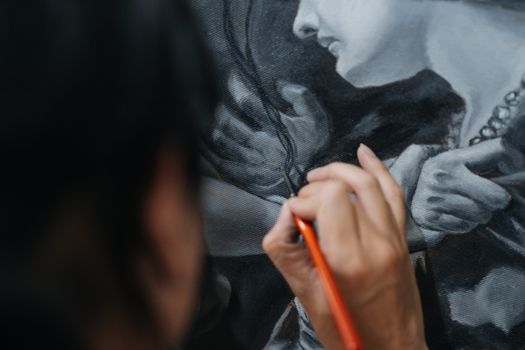 Photo: Huy Nguyễn / Pexels
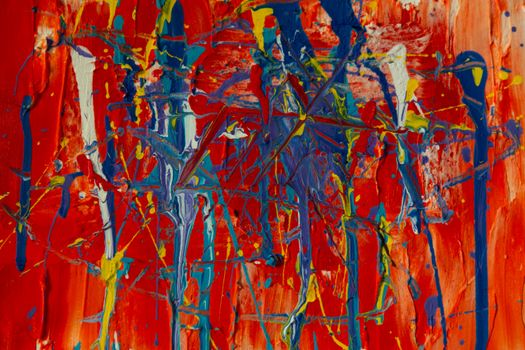 Photo: Steve A Johnson / Pexels
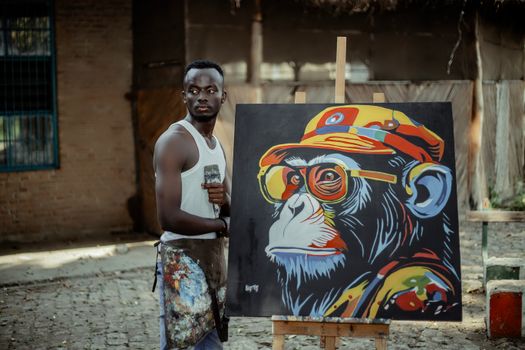 Photo: Chris wade NTEZICIMPA / Pexels
 Photo: Jan van der Wolf / Pexels