Exploring Different Types of Art Movements: A Comprehensive Guide
different types of art movements

Exploring Different Types of Art Movements: A Comprehensive Guide

Journey through centuries of creativity, understanding the forces that shaped visual expression across diverse cultures and times.

Begin Your Artistic Journey

Key Takeaways

  • ✓ Art movements are defined by shared aesthetic styles, philosophies, and goals among artists.
  • ✓ They often emerge as reactions to previous styles or societal changes.
  • ✓ Understanding movements provides context for individual artworks and artists.
  • ✓ Many movements overlap, influence each other, or coexist during specific periods.

How It Works

1
Identify Key Periods

Start by recognizing broad historical eras like Renaissance, Baroque, or Modernism. Each period often houses several distinct movements.

2
Analyze Core Philosophies

Delve into the underlying beliefs and intentions of artists within a movement. What were they trying to communicate or achieve?

3
Recognize Visual Characteristics

Learn to spot the recurring visual elements, techniques, and subject matter that define a particular art movement. Look for common threads.

4
Connect to Cultural Context

Understand how social, political, and technological changes influenced the emergence and evolution of each art movement. Art is a reflection of its time.

The Foundations: Classical and Renaissance Art Movements
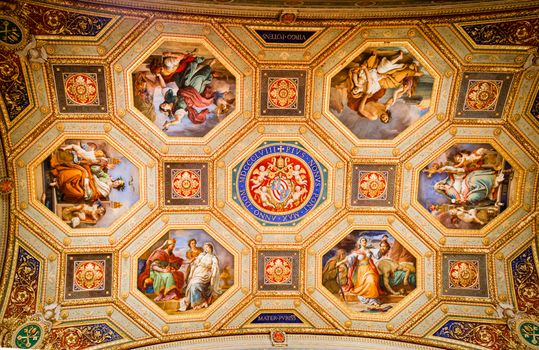
Stunning Roman-inspired ceiling art with intricate paintings and ornamental designs. Photo: Magda Ehlers / Pexels
To truly appreciate the vast spectrum of different types of art movements, we must first cast our gaze back to the foundational periods that laid much of Western art's groundwork. While often viewed as monolithic, even these early eras contained distinct shifts and philosophies. The Classical period, predominantly encompassing ancient Greek and Roman art, emphasized harmony, order, balance, and idealized forms. Sculpture from this era, like the 'Discobolus' or the 'Laocoön Group,' sought to capture human perfection and heroic narratives. Architecture, with its Doric, Ionic, and Corinthian orders, prioritized symmetry and monumental grandeur, influencing countless buildings for millennia. The philosophical underpinnings were deeply tied to reason, democracy, and the pursuit of truth and beauty. Following the relative artistic dormancy of the early Middle Ages, the Renaissance (roughly 14th to 16th centuries) exploded onto the scene, marking a 'rebirth' of classical ideals fused with a newfound humanism. This was a pivotal moment in the evolution of art, shifting focus from the purely divine to the human experience and natural world. Early Renaissance masters like Giotto began experimenting with perspective and naturalistic portrayal, breaking from the flat, symbolic styles of Byzantine art. The High Renaissance, epitomized by giants like Leonardo da Vinci, Michelangelo, and Raphael, perfected techniques such as linear perspective, chiaroscuro, and sfumato, creating works of unparalleled depth, emotion, and realism. Think of Leonardo's 'Mona Lisa,' Michelangelo's 'David,' or Raphael's 'School of Athens.' These artists weren't just skilled technicians; they were thinkers, scientists, and philosophers, embodying the ideal of the 'Renaissance man.' Beyond Italy, the Northern Renaissance saw artists like Jan van Eyck and Albrecht Dürer developing incredibly detailed oil painting techniques, focusing on rich textures and intricate symbolism, often with a more somber or religious tone than their Italian counterparts. This period also saw the rise of patronage from wealthy merchants and the Church, allowing artists greater freedom and resources. The innovations in anatomy, light, and composition during the Renaissance directly informed subsequent art movements and continue to be studied by artists today. Understanding these foundational different types of art movements is crucial for grasping the reactions and evolutions that followed, setting the stage for the dramatic changes of the Baroque and Rococo periods. For more on the early masters, explore Renaissance art history.

Baroque, Rococo, and the Age of Enlightenment Influences
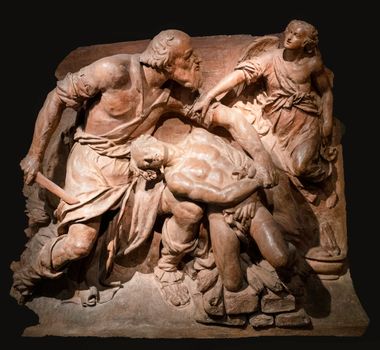
A detailed relief sculpture depicting a dramatic scene of three human figures in dynamic poses. Photo: Marian Florinel Condruz / Pexels
As the Renaissance waned, a new, more dramatic and emotional style emerged: the Baroque (early 17th to mid-18th century). This movement was a direct reaction to the intellectual rigor and classical restraint of the High Renaissance, embracing grandeur, movement, and intense emotion. Driven by the Counter-Reformation in Catholic Europe, Baroque art sought to inspire awe and devotion, using dynamic compositions, rich colors, and stark contrasts of light and shadow (tenebrism). Artists like Caravaggio (with his intense realism and dramatic lighting), Gian Lorenzo Bernini (whose sculptures burst with energy and theatricality), and Peter Paul Rubens (known for his vibrant, fleshy figures and swirling compositions) defined this era. Architecture, too, became more elaborate, with ornate decorations, colossal scale, and curved forms designed to overwhelm the senses, exemplified by St. Peter's Basilica in Rome. The Rococo period (mid-18th century) developed as a lighter, more playful, and intimate offshoot of the Baroque, primarily in France. While still decorative, it moved away from the Baroque's grandeur towards a more delicate, ornamental, and often whimsical aesthetic. Rococo art featured pastel colors, curvilinear forms, and themes of love, leisure, and aristocratic life. Artists like Jean-Honoré Fragonard and Antoine Watteau captured scenes of fêtes galantes (outdoor entertainment) and idyllic landscapes, reflecting the opulent but ultimately superficial tastes of the French aristocracy before the revolution. The interiors of Rococo palaces were characterized by elaborate stucco work, gilded mirrors, and delicate furniture, creating a sense of elegant luxury. Simultaneously, the Age of Enlightenment was sweeping across Europe, emphasizing reason, individualism, and scientific inquiry. This intellectual shift profoundly influenced art, leading to Neoclassicism (late 18th to early 19th century). As a reaction to the perceived frivolity of Rococo and the excess of Baroque, Neoclassicism championed a return to the perceived purity, order, and moral virtues of classical antiquity. Artists like Jacques-Louis David used sharp lines, clear compositions, and heroic subject matter, often drawing inspiration from Greek and Roman history and mythology to convey messages of civic duty and sacrifice. His 'Oath of the Horatii' is a prime example of Neoclassical principles. This era also saw the rise of Romanticism, which, while overlapping with Neoclassicism, offered a contrasting emphasis on emotion, individualism, the sublime, and the power of nature. These different types of art movements demonstrate the constant dialogue and reaction inherent in art history.

Modernism's Explosion: From Impressionism to Surrealism
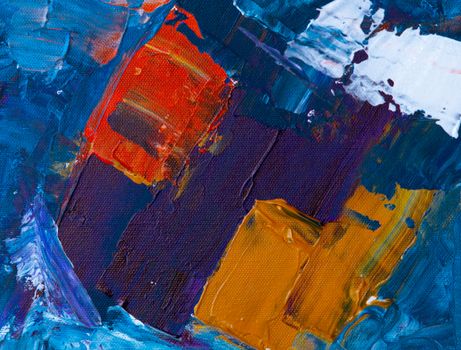
Colorful abstract painting with bold acrylic strokes on canvas. Photo: Steve A Johnson / Pexels
The 19th and 20th centuries witnessed an unprecedented explosion of different types of art movements, collectively known as Modernism. This period was characterized by a radical departure from traditional artistic conventions, a questioning of established norms, and an intense focus on innovation and individual expression. It began with Impressionism (late 19th century), a revolutionary movement that sought to capture fleeting moments and the effects of light and atmosphere, rather than precise detail. Artists like Claude Monet, Pierre-Auguste Renoir, and Edgar Degas used loose brushstrokes, vibrant colors, and unconventional compositions to depict everyday life, landscapes, and urban scenes. Their focus on the 'impression' of a moment marked a significant break from academic painting. Post-Impressionism, led by artists like Vincent van Gogh, Paul Cézanne, and Georges Seurat, built upon Impressionist innovations but pushed them further, emphasizing emotional expression, symbolic meaning, or structural clarity. Van Gogh's intense brushwork and vibrant colors conveyed deep personal feelings, while Cézanne sought to simplify nature into geometric forms, laying groundwork for Cubism. Fauvism, with its bold, non-naturalistic use of color (Henri Matisse being a key figure), and Expressionism, focusing on emotional distortion and subjective reality (German Expressionists like Ernst Ludwig Kirchner), further demonstrated art's move away from strict representation. Cubism, pioneered by Pablo Picasso and Georges Braque in the early 20th century, shattered traditional perspective, depicting objects from multiple viewpoints simultaneously, reducing them to geometric forms. This fundamentally altered how artists approached space and form. Futurism, largely Italian, embraced technology, speed, and the dynamism of modern life. Abstract art, in its various forms (like Kandinsky's lyrical abstractions or Mondrian's geometric grids), completely abandoned recognizable subjects, focusing instead on color, line, and form for their intrinsic expressive qualities. Surrealism, emerging in the 1920s, delved into the subconscious mind, dreams, and irrationality, influenced by Freudian psychology. Artists like Salvador Dalí and René Magritte created dreamlike, often disturbing, and highly symbolic imagery that challenged perception and reality. These movements, and many others, represent a relentless quest for new ways of seeing, feeling, and understanding the world, laying the groundwork for contemporary art. For a deeper dive into the pioneers of this era, consider exploring the innovators of modern art.

Contemporary Currents: Pop Art, Minimalism, and Beyond

A creative arrangement of various black and white stickers on a wall in abstract form. Photo: daria usanova / Pexels
The latter half of the 20th century and the dawn of the 21st have seen a continued proliferation of different types of art movements, each responding to evolving societal, technological, and philosophical landscapes. Pop Art, emerging in the 1950s and 60s, famously challenged the boundaries between 'high' and 'low' culture by incorporating imagery from popular culture, advertising, and mass media. Artists like Andy Warhol, Roy Lichtenstein, and Claes Oldenburg celebrated consumerism and celebrity, using techniques like silk-screening and appropriation to create bold, iconic works that reflected the burgeoning post-war consumer society. Pop Art was often ironic, witty, and accessible, marking a significant shift from the introspection of Abstract Expressionism that preceded it. Minimalism, also gaining prominence in the 1960s, was a direct reaction against the expressive and often chaotic nature of Abstract Expressionism and the narrative elements of Pop Art. Minimalist artists like Donald Judd, Carl Andre, and Dan Flavin sought to reduce art to its most essential forms, using geometric shapes, industrial materials, and repetitive structures. Their work often emphasized the objecthood of the art piece and the viewer's experience of space, stripping away personal expression and illusion. This movement focused on purity, simplicity, and the inherent qualities of materials. Conceptual Art, which began to take hold in the 1960s and 70s, prioritized the idea or concept behind the artwork over its aesthetic or material form. For Conceptual artists, the 'art' was in the thought process, the instruction, or the documentation, rather than a finished, traditional object. Artists like Sol LeWitt and Joseph Kosuth questioned the very definition of art, pushing intellectual boundaries. Postmodernism, an overarching cultural and artistic philosophy, emerged in the late 20th century, challenging grand narratives, embracing pluralism, irony, and pastiche, often blurring the lines between different media and disciplines. Contemporary art continues this trajectory, with movements like Street Art, Digital Art, Installation Art, and Performance Art constantly redefining what art can be, reflecting our increasingly complex and interconnected world. **Key Characteristics of Contemporary Art Movements:** * **Pluralism:** No single dominant style; a wide array of approaches coexist. * **Interdisciplinarity:** Blurring of traditional art forms, combining painting, sculpture, video, performance, etc. * **Global Perspective:** Increased influence from non-Western art traditions and global dialogues. * **Engagement with Social Issues:** Many artists use their work to address political, environmental, and social concerns. * **Technological Integration:** Utilizing new media, digital tools, and virtual reality as artistic mediums.

Comparison

FeatureImpressionismCubismSurrealismPop Art
Key FocusLight & AtmosphereGeometric Forms, Multiple PerspectivesSubconscious, DreamsPopular Culture, Consumerism
Visual StyleLoose Brushstrokes, Vibrant ColorsFragmented, AbstractedDreamlike, Juxtaposed ImageryBold Colors, Graphic, Mass-produced Look
Subject MatterLandscapes, Everyday LifeStill Lifes, FiguresFantasy, Psychological ThemesCelebrities, Products, Comics
Emotional ToneObjective, ObservationalIntellectual, AnalyticalMysterious, ProvocativeIronic, Celebratory, Critical

What Readers Say

"This guide to different types of art movements is incredibly thorough! I finally understand the distinction between Baroque and Rococo. It's a fantastic resource for anyone studying art history."

Ava Chen · Seattle, WA

"As an aspiring artist, grasping the different types of art movements is crucial. This article breaks down complex ideas into digestible parts, making art history truly come alive. Highly recommend!"

Ben Carter · Austin, TX

"I used to feel overwhelmed by art museums, but after reading this, I can confidently identify key characteristics of different types of art movements. My last museum visit was so much more enriching, thanks to this detailed overview."

Chloe Davies · New York, NY

"While very comprehensive, I would have loved to see a bit more on non-Western art movements. However, for Western art, this is an exceptional and well-structured resource that clarified many concepts for me."

David Evans · Chicago, IL

"This article is perfect for both beginners and those looking to refresh their knowledge of different types of art movements. The way it connects historical context to artistic style is brilliant and makes everything click."

Emily Foster · Los Angeles, CA

Frequently Asked Questions

What defines an 'art movement'?

An art movement is a tendency or style in art with a specific common philosophy or goal, followed by a group of artists during a restricted period of time, or at least with the heyday of the movement defined within a number of years. They often arise as a reaction against previous styles or in response to broader societal and cultural shifts.

Are art movements distinct, or do they overlap?

Art movements are rarely entirely distinct. They often overlap in time, influence each other, or emerge as direct reactions to preceding styles. The boundaries are fluid, and artists may even transition between or incorporate elements from multiple movements in their work, making art history a continuous, interwoven narrative.

How can I learn to identify different art movements in person?

To identify art movements, focus on key characteristics: subject matter, color palette, brushwork, composition, and overall emotional tone. Research artists from specific movements and look at their iconic works. Visiting museums and actively comparing pieces from different eras will significantly hone your identification skills. Contextual knowledge about the period also helps.

Is contemporary art considered a single movement, or many?

Contemporary art (art from the late 20th century to the present) is not a single movement but rather an umbrella term encompassing a vast and diverse array of styles, philosophies, and individual practices. It's characterized by pluralism, interdisciplinarity, and a lack of a dominant style, reflecting the complexity of our current globalized world.

How do art movements differ from art periods?

An 'art period' is a broader historical era, often spanning centuries, defined by overarching cultural, social, and political conditions (e.g., the Renaissance, the Baroque period). An 'art movement' is a more specific and focused phenomenon within or across these periods, characterized by a particular shared aesthetic or philosophy among artists (e.g., Impressionism, Cubism, which occurred within the Modern art period).

Who should study different types of art movements?

Anyone with an interest in art, history, culture, or creative expression can benefit from studying art movements. This includes students, aspiring artists, art enthusiasts, museum-goers, and anyone seeking to deepen their understanding of human creativity and the forces that shape our visual world. It provides a rich context for appreciating individual artworks and artists.

Can I appreciate art without knowing its movement?

Absolutely! Art can be appreciated purely on an aesthetic or emotional level without explicit knowledge of its movement. However, understanding the different types of art movements provides a deeper, richer context. It allows you to grasp the artist's intentions, the historical conversation they were part of, and the innovations they introduced, enhancing your overall appreciation.

What are the emerging trends in contemporary art movements?

Emerging trends in contemporary art often involve increased integration of technology (AI art, digital art, VR/AR art), a focus on environmental and social justice issues, a blurring of boundaries between art and activism, and a continued exploration of identity and cultural heritage. Performance art and interactive installations also remain prominent, engaging viewers in new ways.

Embark on a captivating journey through the annals of human creativity. By exploring the different types of art movements, you'll not only enrich your understanding of art history but also gain a deeper appreciation for the boundless expressions of the human spirit. Start your exploration today and see the world through a new artistic lens.

Topics: different types of art movementsart history erasmodern art stylesart movement characteristicsvisual arts evolution
Leo List
Brampton weed
Adultwork EstrelaBet Vai de Bet R7 Bet Betão Galera Bet Rainbet Bet9ja Shop SportyBet BetKing Sisal Loto Foot Hollywoodbets YesPlay Odibets RushBet Jugabet BetWarrior BetCity MSport betPawa Fortebet