Avoiding fines with car rental Italy: Your Art Lover's Guide
Unlock Italy's artistic treasures by car, confidently navigating its unique road rules and avoiding unexpected penalties.
Plan Your Fine-Free TripKey Takeaways
- ✓ ZTL zones are major fine sources in Italian cities.
- ✓ Speed limits are strictly enforced, often by cameras.
- ✓ International Driving Permit (IDP) is legally required.
- ✓ Parking rules vary significantly and are heavily ticketed.
How It Works
Before you even land, map out your itinerary, paying close attention to cities and towns you plan to visit. Identify potential ZTLs or restricted areas along your path.
Familiarize yourself with key Italian road signs, especially those indicating ZTLs, parking restrictions, and speed limits. A quick online search for 'Italian road signs' will be invaluable.
Ensure you have an International Driving Permit (IDP) before you leave the US. Confirm your rental car has all necessary safety equipment like reflective vests and warning triangles.
Adhere strictly to speed limits and parking regulations. When in doubt about parking, seek a paid garage or a designated white-lined space (free) or blue-lined space (paid with meter).
Navigating Italy's ZTL Zones: Protecting Your Art Pilgrimage
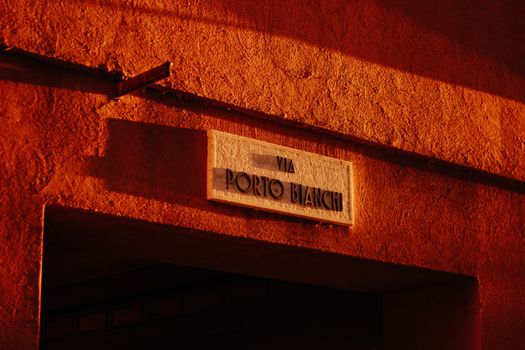 Photo: Ömer Gülen / Pexels
ZTLs are restricted traffic zones implemented in historic city centers across Italy, designed to preserve these ancient areas, reduce pollution, and prioritize pedestrians and public transport. These zones are ubiquitous in popular tourist destinations such as Florence, Rome, Siena, Bologna, Pisa, and countless smaller, charming towns. They are typically active during specific hours, often indicated by electronic signs, and are monitored by cameras that automatically photograph vehicle license plates. If your rental car enters a ZTL without proper authorization, a fine is almost guaranteed. And here’s the kicker: these fines are often issued per entry, meaning you could rack up multiple penalties within minutes if you drive through the same zone repeatedly or enter and exit several times.
The car rental company will eventually receive these notifications, often months after your trip, and will then charge your credit card for the fine, typically adding an administrative fee for their processing efforts. This can lead to a cascade of unexpected charges long after you’ve returned home, dimming the fond memories of your artistic escapades. To avoid this, proactive planning is essential. Before driving into any Italian city, take a moment to research its ZTL boundaries and operating hours. Many cities have maps available online, and some navigation apps (though not all are perfectly reliable for ZTLs) can offer warnings. Often, hotels located within ZTLs can register your vehicle with local authorities for the duration of your stay, granting you temporary access. Always inquire with your accommodation if this is an option. If not, park outside the ZTL and walk or use public transportation to reach your destination. Remember, the beauty of Italian art often lies within these historic cores, making parking outside and strolling in a delightful part of the experience. For more insights on blending art and travel, check out our guide on experiencing art in smaller Italian towns.
Speed Limits and Road Rules: Essential Knowledge for US Drivers
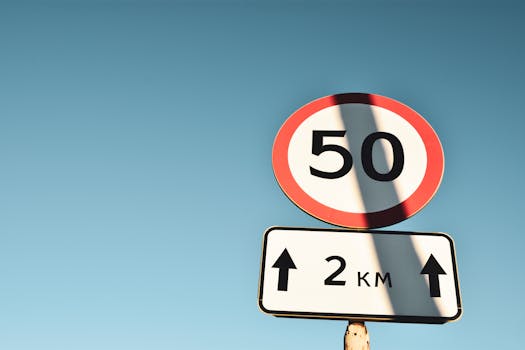 Photo: Alexander Kovalev / Pexels
The general speed limits in Italy are as follows: 50 km/h (approximately 31 mph) in urban areas, 90 km/h (approximately 56 mph) on secondary roads, 110 km/h (approximately 68 mph) on major out-of-town roads, and 130 km/h (approximately 81 mph) on autostrade (motorways). However, these are general guidelines, and specific signage always takes precedence. For instance, in many urban areas, speed limits can drop to 30 km/h (18 mph) in particularly sensitive or residential zones. Always be on the lookout for posted limits, which are indicated in kilometers per hour.
Another critical aspect for American drivers to grasp is the concept of 'Autostrada' (toll roads). These are Italy's primary highways, offering efficient travel between major cities and regions. They are distinguished by green signs, unlike the blue signs for regular national roads. You’ll typically encounter toll booths at entry and exit points. It's crucial to understand the payment system: when entering, you usually take a ticket, and when exiting, you insert the ticket and pay the corresponding toll. Look for lanes marked 'Carte' (card payment) or 'Contanti' (cash payment). Avoid lanes marked 'Telepass' unless your rental car specifically comes equipped with one and you understand its usage, as these are for automated electronic toll collection and can lead to fines if used incorrectly.
Beyond speed and tolls, other rules to remember include always driving with headlights on, even during the day, outside urban areas. The use of seatbelts is mandatory for all occupants. Cell phone use while driving is strictly prohibited unless using a hands-free system. And perhaps most importantly, Italian drivers can be assertive. It’s essential to be decisive, predict other drivers' actions, and maintain a constant awareness of your surroundings. Roundabouts are common and follow specific rules: give way to traffic already in the roundabout, unless otherwise indicated by signs. Understanding these nuances will not only help you avoid fines but also contribute to a much more relaxed and enjoyable driving experience as you journey between Italy's magnificent cultural landmarks.
Our partners at Noleggio auto in Italia offer related services.
Parking Perfection: Deciphering Italian Parking Rules to Avoid Penalties
The most common parking zone colors you’ll encounter are white, blue, and yellow. **White lines** typically indicate free parking, but these spots are rare, especially in popular city centers or near major attractions. If you do find a white-lined spot, double-check for any additional signs that might impose time limits (e.g., a sign with a clock icon and numbers indicating hours) or restrict parking on certain days. Sometimes, a 'disco orario' (parking disc) is required, which you set to your arrival time. Rental cars often come with these, but if not, you can purchase one at a tabaccheria.
**Blue lines** signify paid parking. These are far more common in urban areas. You'll need to find a nearby 'parcometro' (parking meter) to purchase a ticket, which you then display prominently on your dashboard. These meters usually accept coins and sometimes credit cards, and often have instructions in multiple languages. Pay close attention to the hours of operation; parking might be free during certain times (e.g., evenings, Sundays, or holidays), but you must still display a ticket for the paid hours. Overstaying your paid time is a guaranteed fine.
**Yellow lines** are strictly reserved for specific vehicles, such as taxis, buses, or disabled permit holders. Parking in a yellow-lined space is absolutely forbidden for regular vehicles and will almost certainly result in a fine and potential towing. Never, under any circumstances, park in a yellow-lined spot.
Beyond the color codes, always be wary of signs indicating 'Divieto di Sosta' (No Stopping) or 'Divieto di Fermata' (No Parking). These are often accompanied by a red circle with a diagonal line (no parking) or a red circle with an 'X' (no stopping). Also, look out for signs indicating street cleaning days and times ('Pulizia Strada'), as parking during these hours will lead to a fine and likely towing. When visiting a major art gallery or museum, research their parking options in advance. Many provide underground garages, which are often the safest and most convenient, albeit paid, option. For instance, exploring the Uffizi in Florence means planning for a garage outside the ZTL. For deeper dives into Italian culture, consider our tips on experiencing local Italian festivals, which often have unique parking considerations.
Common Mistakes & Proactive Solutions for a Fine-Free Italian Journey
**Mistake 1: Ignoring the International Driving Permit (IDP).** While your US driver's license is valid in many countries, Italy legally requires an IDP alongside it. Many rental agencies don't ask for it, but if stopped by police, failure to produce one can result in a hefty fine.
_Solution:_ Obtain your IDP from AAA or AATA before you leave the US. It's inexpensive and quick to get.
**Mistake 2: Assuming GPS is ZTL-Proof.** Standard GPS systems are not always updated with real-time ZTL information and may direct you through restricted zones.
_Solution:_ Supplement GPS with manual map checks (Google Maps often highlights ZTLs, but verify locally) and look for physical ZTL signs. When in doubt, park on the outskirts and walk or use public transport.
**Mistake 3: Underestimating Speed Camera Prevalence.** Italy has a dense network of speed cameras, both fixed and mobile, often without obvious warning signs.
_Solution:_ Stick rigidly to posted speed limits. Don't assume you can get away with a 'little over.' Many navigation apps offer speed camera warnings; consider using one.
**Mistake 4: Misinterpreting Parking Signs.** The color-coded system and specific time restrictions can be confusing.
_Solution:_ When in doubt, always opt for a paid parking garage ('parcheggio a pagamento'). They are clearly marked, secure, and eliminate guesswork. If using street parking, meticulously check all signs for time limits, payment requirements, and cleaning schedules.
**Mistake 5: Not understanding the rental car company's role in fines.** Rental companies receive fine notifications months later, then charge your card and add administrative fees.
_Solution:_ Read your rental agreement carefully regarding fine processing fees. Keep a buffer on your credit card for several months after your trip. If you suspect a fine, contact the rental company directly.
**Mistake 6: Overlooking Toll Road Procedures.** Incorrectly using Autostrada toll booths (e.g., entering a Telepass lane without one) can lead to fines.
_Solution:_ Familiarize yourself with the 'Carte' and 'Contanti' lanes. Keep small bills and coins handy for cash payments. If you make a mistake, do not reverse; press the help button or take a ticket and pay online later if possible.
By being prepared and vigilant, you can transform your Italian road trip into an unforgettable journey filled with art, history, and smooth, fine-free driving.
Comparison
| Feature | Rental Car (Proactive) | Rental Car (Reactive) | Public Transport |
|---|---|---|---|
| Flexibility to Explore | High | High (but costly) | Medium |
| Access to Remote Art Sites | Excellent | Excellent | Limited |
| Risk of Fines | Low | High | None |
| Cost (excl. fines) | Medium | High | Low |
| Convenience in Cities | Low (parking) | Low (parking) | High |
| ZTL Navigation | ✓ | ✗ | ✓ |
What Readers Say
"This guide saved my trip to Italy! I was so nervous about ZTLs after hearing horror stories, but following these tips, I confidently explored Tuscany's art villages without a single fine. Truly invaluable."
Sarah P. · Boston, MA"I rented a car to see the hidden gems between Rome and Naples. The advice on parking and speed limits was spot on. No unexpected charges post-trip, which was a huge relief."
Mark T. · San Francisco, CA"After a previous trip resulted in two ZTL fines, I was determined to be smarter this time. This article's detailed breakdown of ZTLs and parking zones helped me avoid any penalties, making my art history tour perfect."
Emily R. · Austin, TX"Good information, especially about the IDP and speed cameras. I still found parking a bit challenging in smaller towns, but the guide's emphasis on paid garages was very helpful for peace of mind."
David L. · Chicago, IL"As someone who hates unexpected fees, this guide was a godsend. It's comprehensive and easy to understand, turning potential stress into a smooth, enjoyable art exploration across Italy."
Jessica M. · Seattle, WAFrequently Asked Questions
What is the most common fine for US tourists with car rental Italy?
The most common and costly fines for US tourists driving rental cars in Italy stem from unauthorized entry into ZTL (Zona a Traffico Limitato) zones. These restricted traffic areas in historic city centers are monitored by cameras, issuing fines per entry, which can quickly accumulate if not understood.
Do I really need an International Driving Permit (IDP) for Italy?
Yes, an International Driving Permit (IDP) is legally required by Italian law for non-EU citizens, including those from the US, to drive in Italy. While rental agencies may not always ask for it, failure to produce one if stopped by police can result in a significant fine.
How can I avoid ZTL fines in Italian cities?
To avoid ZTL fines, research city ZTL boundaries before driving, look for explicit ZTL signs (a white circle with a red border), and consider parking outside the restricted zone and walking or using public transport. If staying in a hotel within a ZTL, ask if they can register your vehicle for temporary access.
What happens if I get a fine after returning my rental car?
If you incur a fine, the Italian authorities will send it to the rental car company, often months later. The rental company will then identify you as the driver, charge your credit card for the fine amount, and typically add an administrative processing fee, which can range from €30-€60 per fine.
Is it better to rely on public transport than a rental car for an art trip in Italy?
The best option depends on your itinerary. Public transport is excellent for major cities, avoiding ZTLs and parking woes. However, a rental car offers unparalleled flexibility to explore smaller towns, rural artistic sites, and scenic routes not easily accessible by train or bus, making it ideal for a comprehensive art pilgrimage if driving rules are understood.
Who should prioritize understanding Italian driving rules?
Anyone from the US planning a self-drive tour of Italy, especially those aiming to visit multiple cities, historic towns, or rural artistic locations, should prioritize understanding Italian driving rules. This includes art historians, photographers, and independent travelers seeking freedom and flexibility.
Are there any apps that help with ZTLs or parking in Italy?
While some navigation apps like Google Maps might highlight ZTLs, they are not always real-time or fully comprehensive. Apps like Waze can provide speed camera warnings. For parking, local city apps or general parking apps might help locate garages, but always verify with local signage.
How are speed limits enforced in Italy, and what are the penalties?
Speed limits in Italy are strictly enforced through a widespread network of fixed 'autovelox' (speed cameras) and 'tutor' systems (average speed cameras), as well as mobile police units. Penalties vary based on the degree of speeding, ranging from moderate fines for minor infractions to very significant fines, points on a license (if Italian), and potential license suspension for severe offenses.
Don't let unexpected fines detract from your artistic adventure in Italy. By understanding and respecting local driving laws, especially ZTLs and parking regulations, you can ensure a smooth, penalty-free journey. Arm yourself with this knowledge, rent with confidence, and immerse yourself fully in Italy's unparalleled cultural tapestry.